
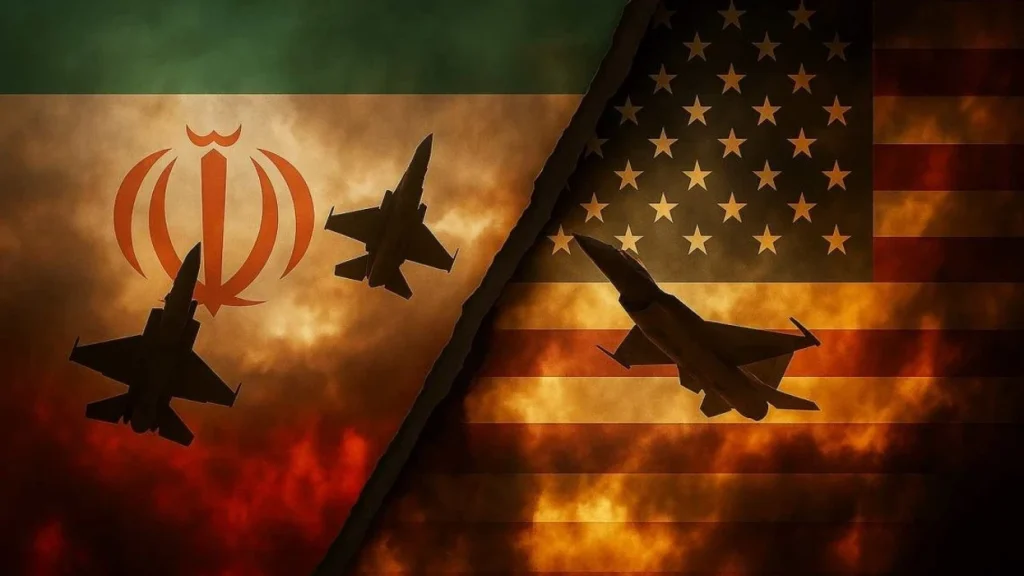
US President Donald Trump met with his cabinet on Wednesday, at a sensitive moment for talks aimed at ending the war with Iran.
During this meeting, the first since April 26, Trump stated that the Iranian side is "negotiating with the last forces."
Trump's belief that a deal is close comes just days after he insisted that his administration and Tehran had "negotiated a great deal" on a solution, but that the talks were still in a precarious state.
The president is seeking a deal that would reopen the Strait of Hormuz and give him a credible argument that Iran's nuclear capability has been reduced enough to declare victory, ending a conflict that has been politically unpopular with Republicans.
But as things stand, Trump risks an unsatisfactory outcome for his "war of choice."
The emerging agreement postpones many critical issues and has already exposed the Republican president to harsh criticism, even from some of his supporters, that Iran's hardline leaders will emerge from the conflict damaged but politically stronger.
All of this is happening just as midterm elections for control of Congress are approaching, and when Republicans worry that rising costs and fuel prices are negatively affecting the mood of American voters.
Trump, at the beginning of the cabinet meeting, said that he is not interested in the midterm elections and that there is still work to be done to reach an agreement, while expressing a degree of certainty that both sides will reach it.
"They really want to make a deal," Trump said. "So far they haven't. We're not happy with it, but we're going to be, otherwise we're going to have to finish the job," he added.
But talks were further complicated after US forces carried out what the Pentagon called “defensive” strikes on missile launch sites and mine-laying ships in southern Iran on Monday. The US said it had acted with “restraint” given the weeks-long ceasefire, while Iran condemned the action as a sign of “bad faith and distrust.”
While Trump insists that a deal is within reach, there appear to be differences between the US and Iran on several key issues.
Under the potential deal, Tehran would agree to give up its stockpile of highly enriched uranium, a key demand of Trump, in exchange for sanctions relief.
Iran has 440.9 kilograms of uranium enriched to 60% purity, a technical step closer to the 90% level needed for nuclear weapons, according to the International Atomic Energy Agency (IAEA). Iran has not publicly pledged to give up its uranium.
Trump said in a post on Truth Social on Monday that the uranium, believed to be under nuclear facilities hit by US airstrikes last year, would be handed over to the US or "destroyed on site or at another acceptable location, with the Atomic Energy Commission or its equivalent as a witness to this process and event."
This comment indicates a softening of Trump's previous stance, which called for the US to take full control of Iran's uranium reserves.
The GeoPost
 F16 on alert in Romania after drone incident: NATO reacts harshly to Russia
  "Political agreement", Hungary and the EU towards unlocking over 16 billion euros
  Japan sends troops to train with NATO mission in Ukraine
  Europe and NATO warn Moscow after Russian drone hits residential building in Romania
  NATO moves to the Baltics – up to 60 troops near the border with Russia
  America's Invisible Shield – How Does NORAD Work Today?