
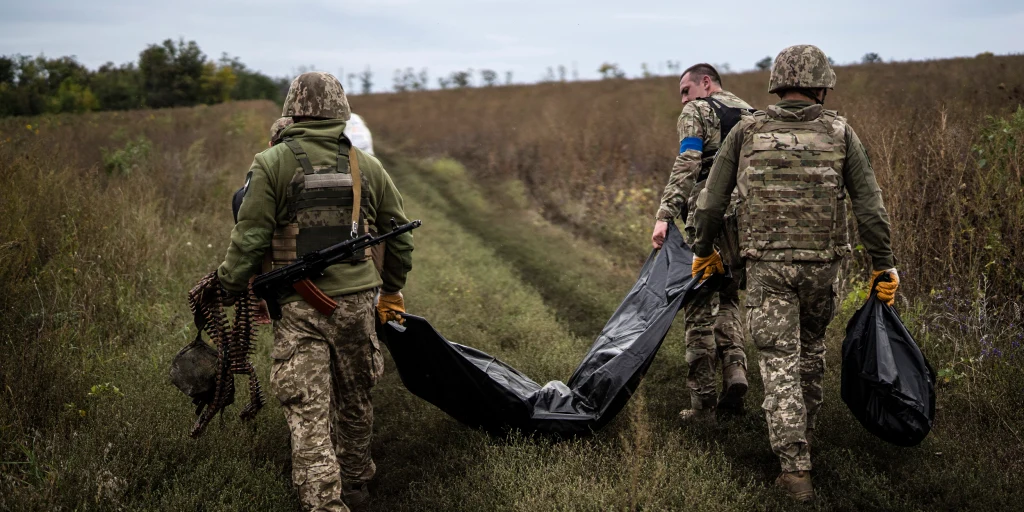
When Vladimir Putin launched an invasion of Ukraine in 2022, the Kremlin believed that the Russian military would quickly occupy Kiev, overthrow the government of Volodymyr Zelensky, and install a pro-Russian regime that would give Moscow control of the Donbas.
Instead of a quick victory, the war has entered its fifth year and the consequences are increasingly shaking Russia itself.
The British newspaper "The Guardian" writes that discontent is growing in Russian society, while analysts warn that Putin is seriously losing the support of part of the population for the first time since the beginning of the war.
“In the fifth year of the war, we see a growing wave of discontent in Russian society,” analyst Piotr told The Guardian, adding that Russia is still a deeply authoritarian state where people cannot easily go out to protest, but that changes are still being felt. According to him, Putin’s approval rating just before the invasion was 63 percent, after the war began it rose to 83 percent, but is now falling again. The Guardian also claims that the overall happiness index of citizens reached its lowest level in the last 15 years in April.
Although support for Putin remains high compared to Western leaders, analysts believe that the "rallying around the flag" effect that the war initially caused is practically over. disappeared.
The economy is weakening, citizen anger is growing
More and more discontent can be seen online. According to The Guardian, bloggers and influencers who have remained loyal to the Kremlin for years are starting to speak out about the country's problems.
At the same time, the economy is entering serious difficulties. The growth of the Russian economy is estimated at only 0.4 percent, while some experts believe that the country is already in recession.
"Higher taxes and rising inflation have led to a significant increase in food prices and household bills," the newspaper said.
The British newspaper "The Telegraph" warns that the Russian economy is in a "new, much more difficult phase", as company debts, the budget deficit and pressure on the banking system are increasing.
Internet blockades and the approaching war with Moscow
Internet restrictions implemented by the Russian Federal Security Service (FSB) have caused particularly widespread discontent. Moscow's official explanation is protection from Ukrainian drone attacks, but the consequences for daily life are profound.
“Russia is a deeply digitalized society,” Piotr told The Guardian. “In Moscow and St. Petersburg, tens of thousands of people work as delivery people or drivers. When the internet goes down, entire parts of the city are practically paralyzed.”
The British newspaper "The Telegraph" reports that internet blockades have led to losses of billions of rubles and have paralyzed taxi services, food delivery, electronic payments and even access to public services.
The Ukrainian drone strikes further changed the atmosphere in Russia. The war, which the Kremlin has tried to keep out of the daily lives of ordinary citizens, is now being felt in Moscow and other major cities.
"Putin broke the unwritten agreement with the Russians"
“Putin has broken an unwritten contract with the population,” Piotr said in an interview with The Guardian. “The message to the citizens was: I will wage war, but I will protect you from the consequences. Now more and more Russians are seeing that their lives are changing too.”
Discontent, according to the Guardian, is also spreading among the elite. Oligarchs and senior government officials initially expected either a quick victory or a peace deal brokered by Donald Trump. However, today many see a president who has no clear exit strategy.
A Russian businessman told a British newspaper that there is a growing sense among the elite that "some kind of catastrophe" is approaching.
No withdrawal plan
Despite his problems, however, Putin shows no signs of backing down. After changing the constitution, he managed to stay in power beyond 2030, while there is virtually no discussion at the head of state about a possible successor.
“He believes he is only safe as long as he is in power,” Piotr told The Guardian, recalling that Putin faces an arrest warrant from the International Criminal Court and that leaving office would pose a serious risk to him.
Analysts believe that the greatest threat to the regime comes not from the streets, but from the Kremlin itself. However, Putin has systematically eliminated potential rivals in recent years. After the rebellion of Yevgeny Prigozhin in 2023 and his subsequent death in a plane crash, many in the Russian elite realized that the Kremlin would not tolerate dissent.
The war is no longer going according to the Kremlin's plan
At the same time, the situation on the front is no longer what Moscow expected. Ukraine has managed to regain part of its territory in recent months, while Russian losses are increasing faster than the Kremlin can find new soldiers. The Telegraph claims that Russia may soon be forced into a new major mobilization.
Although Russia has yet to see a mass, organized protest movement, more and more analysts are warning that the country is entering a period of serious internal instability. The struggle that was supposed to confirm Putin's power is now increasingly showing the price that Russian society must pay.
The GeoPost
 F16 on alert in Romania after drone incident: NATO reacts harshly to Russia
  "Political agreement", Hungary and the EU towards unlocking over 16 billion euros
  Japan sends troops to train with NATO mission in Ukraine
 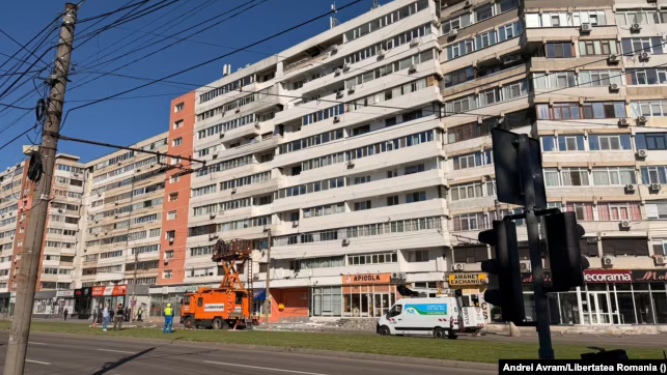 Europe and NATO warn Moscow after Russian drone hits residential building in Romania
  NATO moves to the Baltics – up to 60 troops near the border with Russia
  America's Invisible Shield – How Does NORAD Work Today?