
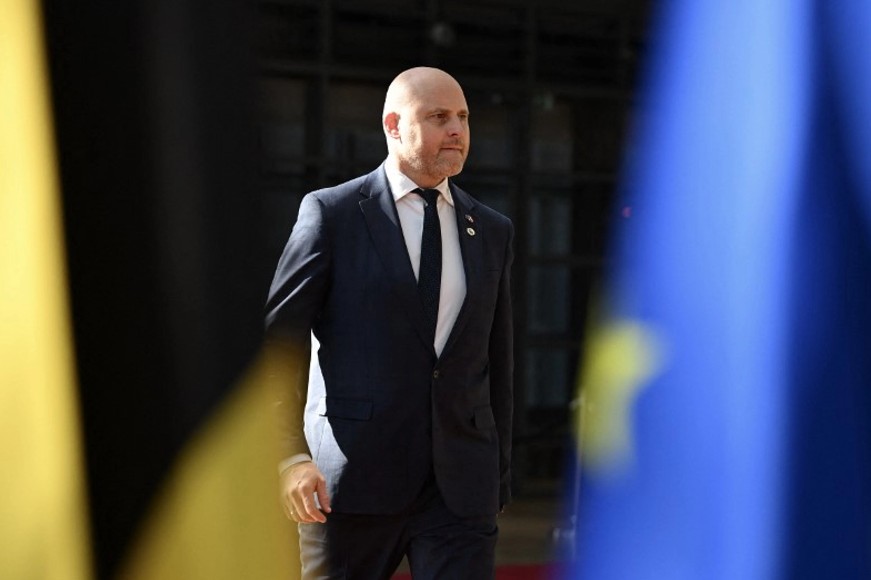
Latvia has signed a nearly 3.5 billion euro ($4 billion) defense loan agreement under the EU's SAFE lending program, becoming the eighth country to join the scheme.
EU Defence Commissioner Andrius Kubilius joined Latvian Prime Minister Andris Kulbergs, Defence Minister Raivis Melnis and Finance Minister Maris Kučinskis in Riga on Saturday for the signing ceremony.
Kubilius described Latvia as a “leader in European defense coordination,” highlighting its rapid development of drone and counter-drone capabilities as “an example for other member states” and a key contribution to European security.
Latvia will use the funds to accelerate investments in unmanned aerial systems, guided missiles, anti-drone technology and broader national defense industrial capacity, with a strong emphasis on procurement speed and regional deterrence on the eastern flank.
Russia's war against Ukraine has also had a direct impact on Latvia. Drones diverted from their intended course due to the Russian blockade have entered the airspace of Latvia and its Baltic neighbors on several occasions. Riga recently announced that it will deploy drone interceptor units to its eastern border to counter the threat.
The agreement is part of the EU's 150 billion euro ($172 billion) Security Action for Europe (SAFE) program. Latvia is the eighth country to join the defense funding scheme, after Poland, Lithuania, Croatia, Romania, Belgium, Cyprus and France.
Kulbergs said that Latvia's security is his government's "first priority," emphasizing that the SAFE instrument provides "access to the necessary funding" to ensure national and regional security.
"This money should serve the development of Latvian industry and the interests of our economy," Kulbergs added.
The GeoPost
 Iran to establish direct 'hotline' with US over Strait of Hormuz
  Russian stocks fall to lowest level since March 2023
  JD Vance: "Major progress" in US-Iran talks in Switzerland
  Trump threatens Iran with new attacks: Stop Hezbollah or you will be hit "even harder"
  Janša's return to power raises concerns in the EU and the Western Balkans
  Germany and France demand stricter measures against Russian shadow fleet