
There are months in history that last more than thirty days. June 1999 is one of them. For Kosovo, it was not simply the end of a season or the beginning of summer.
It was the month when one era ended and another began. It was the month when Serbian military columns left Kosovo, while Albanian refugee columns returned to their homes. The month when tanks rolled out of cities and villages, while NATO troops entered them. The month when fear began to be replaced by hope.
In the early days of June 1999, no one was sure that the end of the war was really near. For those who remained in Kosovo, each day seemed like a continuation of the previous one. Killings, burnings, expulsions and insecurity had become part of everyday life. NATO bombing had begun on March 24 and was continuing without interruption. On the ground, Serbian forces continued their operations, while hundreds of thousands of Albanians were in refugee camps in Albania, North Macedonia and elsewhere.
Just a few weeks ago, the world had seen images of endless columns of Albanians fleeing Kosovo. Entire families, with whatever they could carry, had abandoned their homes to escape a systematic campaign of expulsion and terror. These were the months when Slobodan Milosevic's regime was trying to forcefully change Kosovo's demographic reality. Instead, it was moving towards its own historic defeat.
On June 9, in Kumanovo, Yugoslav military representatives signed the agreement with NATO that would seal the end of the war. On paper it was a military agreement. In reality it was an admission of the loss of control over Kosovo. For the first time since the beginning of the conflict, there was certainty that Serbian forces would withdraw and that international troops would enter the territory.
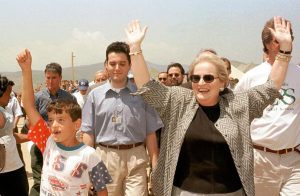
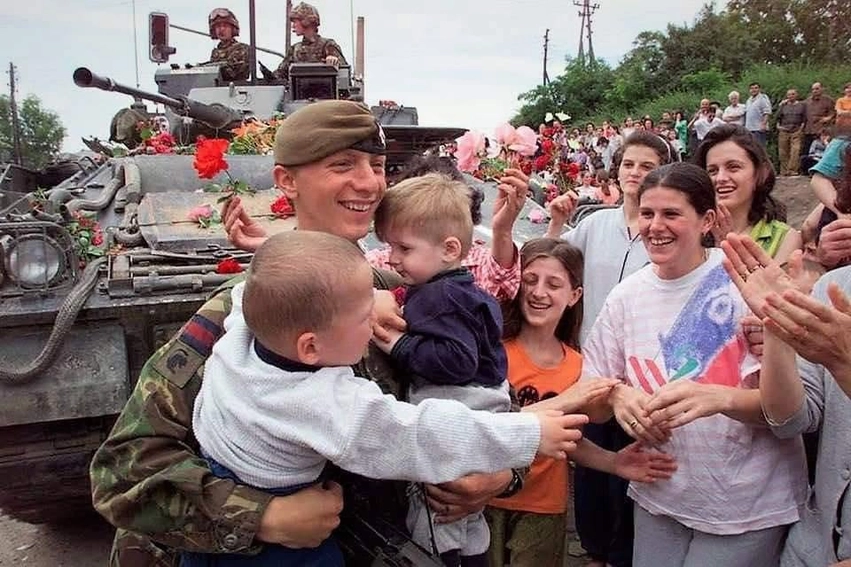
However, for ordinary people, freedom did not come immediately with the signing of documents. It came with the roar of NATO vehicle engines, with flags waving over military columns, and with the first sight of soldiers entering Kosovo. It came as people emerged from the basements and shelters where they had spent months. It came as children saw the streets for the first time in a long time without Serbian police and paramilitaries.
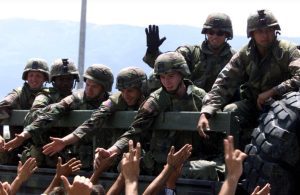
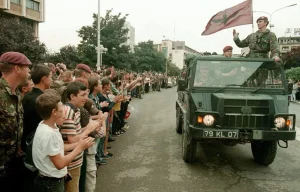
The entry of KFOR on June 12 remains one of the most important moments in Kosovo’s modern history. For most Albanians, they were not simply foreign troops entering the territory. They were forces that symbolized survival. They were the guarantee that the machinery of repression that had produced massacres, expulsions, and destruction would not return.
The images of that time speak for themselves. In many cities and villages, NATO columns were greeted with flowers, cheers, and tears of joy. People stopped military vehicles just to thank the soldiers. In those moments, there was no need for translators. The language of liberation was understood by everyone.
But June 1999 was not just a story of triumph. It was also a story of pain. The returning refugees were not finding the Kosovo they had left behind. They were returning to burned villages, destroyed homes, looted properties, and families cut in half. Many of them still did not know the fate of their loved ones. For thousands of families, the war was over, but the anguish was not.
At the same time, Kosovo was experiencing another symbolic moment: the reunion with the fighters of the Kosovo Liberation Army. After years of resistance and war, members of the KLA were emerging from the mountains and war zones to return to their families and communities. For many Albanians, they represented the continuity of the resistance that had kept hope alive in the most difficult years.
The history of June 1999 cannot be understood without this combination of two decisive processes: the KLA resistance on the ground and the NATO military intervention. One without the other would not have produced the same result. The KLA kept the Kosovo issue alive and challenged Serbian power on the ground, while NATO created the military force that forced Belgrade to admit defeat.
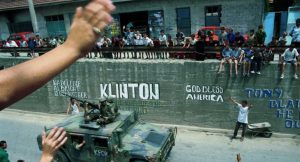
Meanwhile, a scene unfolded on the streets of Kosovo that would forever remain in the collective memory: in one direction, columns of the Serbian army and police were moving, while in the other direction, columns of Albanian refugees were returning home. Two opposing movements that symbolized the end of one era and the beginning of another.
The war left behind some 13 dead, thousands missing, hundreds of thousands of refugees, and wounds that continue to be felt today. But June 1999 remains the moment when the project of subjugating Kosovo by force finally failed. It was the month when an exiled people began to return to their homeland, and when a regime that had built its power on violence was forced to retreat.
Therefore, when we talk about June 1999, we are not just talking about the end of a war. We are talking about the end of a period of darkness and the beginning of Kosovo's path to freedom.
In the memory of Albanians, that June remains when Serbia was leaving and Kosovo was returning home.
The GeoPost
 Biserko: Every new cemetery in Kosovo restores Serbia's responsibility for war crimes
  Serbian officials' rhetoric brings back 90s narratives against Kosovo
  KFOR Commander: Instigative rhetoric and disinformation remain a concern for security in Kosovo
  Serbia honors 37th Brigade, while its archive remains a requirement for clarifying war crimes in Kosovo
  Serbia arrests man on Hungarian border on suspicion of war crimes
  Kosovo arrests another war crimes suspect in Zubin Potok