

The Chair of the Helsinki Committee for Human Rights, Sonja Biserko, has stated that there are still many undiscovered mass graves in Kosovo, which, according to her, testify to the extent of the crimes committed during the war.
In an interview for "Info Magazine" in Klan Kosova, Biserko said that every discovery of a new cemetery brings back the issue of the responsibility of the Serbian state, which she claims has never fully faced its past.
"There are still many graves that have not been discovered, and which are indicative of the massiveness of the crimes that Serbia has committed in Kosovo, but also in Bosnia and Croatia. Therefore, every discovery of a new grave opens the issue of Serbia's responsibility, which has never faced this issue. This is despite the fact that the Hague Tribunal for Yugoslavia convicted the military and political leaders of Serbia, precisely because of the crimes in Kosovo."
"Unfortunately, the war crimes court in Serbia did not continue to try those who had a lower position because that is what it was established for. And so this court stopped working and effectively dealing with various people who committed crimes. As is the case with the 37th Motorized Brigade, which was led by Ljubiša Diković, who was later promoted to Chief of General Staff," she stated.
Biserko also spoke about the case of a person from Istog, who according to her indicated the location of a grave in Zubin Potok and was subsequently arrested by the BIA.
"This happened even though the Humanitarian Law Center here filed a criminal complaint against him with a lot of data and references that point to Dikovic's responsibility for many war crimes committed in Kosovo. You know how it is here, the official interpretation of what happened in Kosovo, Bosnia and Croatia, that is, in the entire process of the collapse of Yugoslavia, is that it says here that "Serbia and the Serbs are the biggest victims". This is a thesis that has been widely accepted and promoted not only by political elites, but also by cultural, religious and other ones."
She compared this to the case in Bosnia, where a Serb witness told of a mass grave with about 1 victims in Tomasica.
"So this is a firm stance of the majority of citizens, instead of dealing with the responsibility of the Serbian state for what happened in Kosovo. In this sense, anyone who testifies to Serbia's responsibility in this case goes through great difficulties. In the case of the person arrested by the BIA, who is from Istog, it is a man who has shown where the grave is in Zubin Potok. We have the case in Bosnia when a Serb has shown the location of a mass grave with 1000 victims in Tomašića."
Biserko recalled that during the war in Kosovo, according to her, over 800 Albanians were expelled from their homes and fled to neighboring countries, while many of them also faced the destruction of their personal documents.
"So such people later faced abuse, harassment and things like that. It is very brave if this person discovered this cemetery. Because as time goes by, people cannot bear the burden when they know about these events, and every now and then, they talk about this history. The current government in Serbia was part of that government that committed crimes in Kosovo, so they are part of that project. Let me remind you that recently a government minister in Belgrade, a member of the SPS party, declared that if she were in Milosevic's place, she would cleanse Kosovo of Albanians."
"Therefore, it is a fact that Milosevic also attempted to implement this ethnic cleansing, by persecuting over 800.000 Albanians from Kosovo who went to Montenegro, Albania, and Macedonia. Most of these people had their personal documents destroyed so that they would have no evidence when they returned to Kosovo. Without NATO intervention, these people would hardly have returned."
According to her, it is difficult to expect the opening of military archives to be accepted, as they could shed light on responsibility for crimes committed in Kosovo and, as she stated, in other parts of the former Yugoslavia.
"One thing to keep in mind is that war crimes in Kosovo were not committed by only paramilitary formations, but the army was also directly involved in these crimes. In this sense, the opening of military archives actually falls under the responsibility of the Yugoslav army. It is unlikely that they will respond to Pristina's request to open their archives. Because if the archives are opened, it will be easy to identify those who were part of the crimes in Kosovo and, to a large extent, in Croatia," Biserko declared.
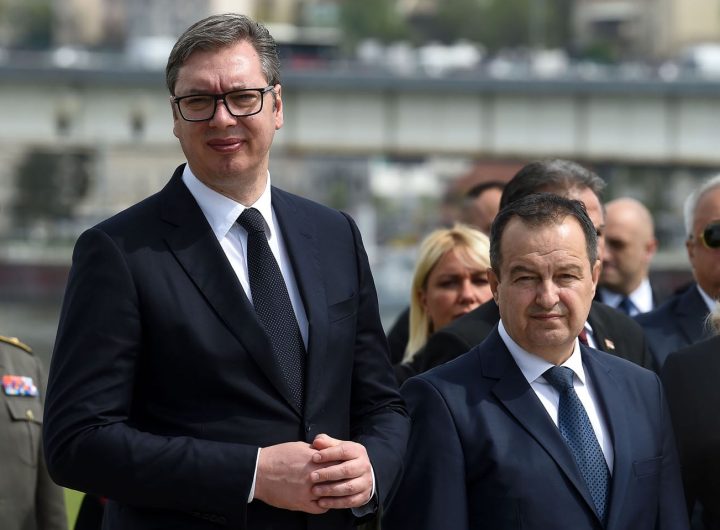 Serbian officials' rhetoric brings back 90s narratives against Kosovo
  KFOR Commander: Instigative rhetoric and disinformation remain a concern for security in Kosovo
 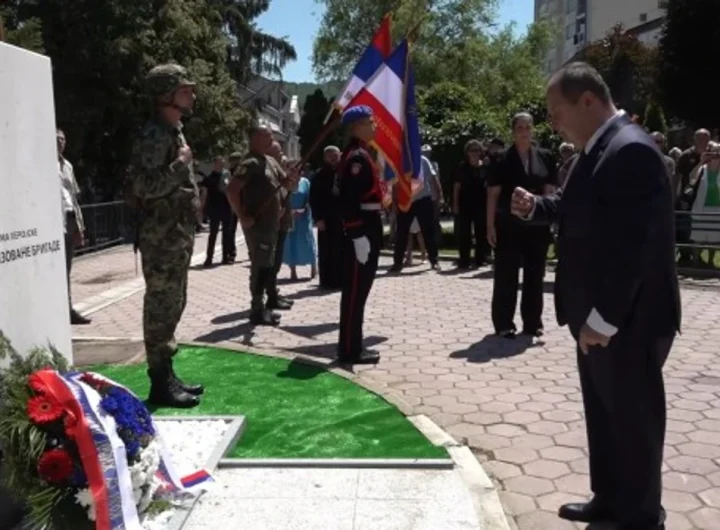 Serbia honors 37th Brigade, while its archive remains a requirement for clarifying war crimes in Kosovo
  Serbia arrests man on Hungarian border on suspicion of war crimes
  Kosovo arrests another war crimes suspect in Zubin Potok
 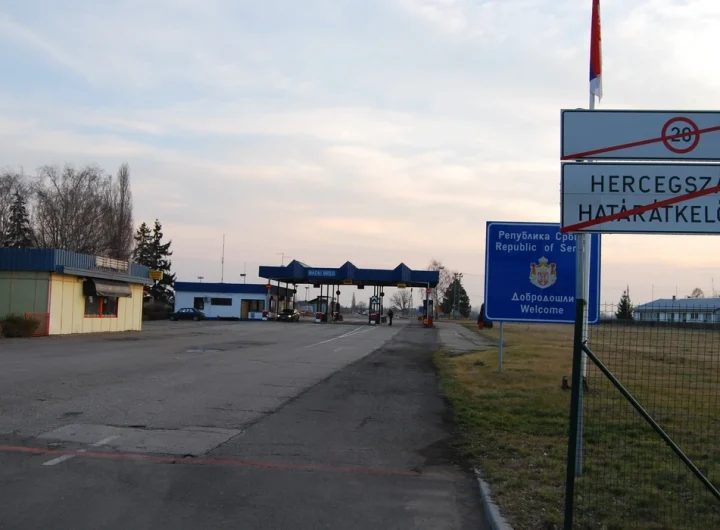 Koci: Another Kosovo citizen detained by Serbian authorities at the border with Hungary