
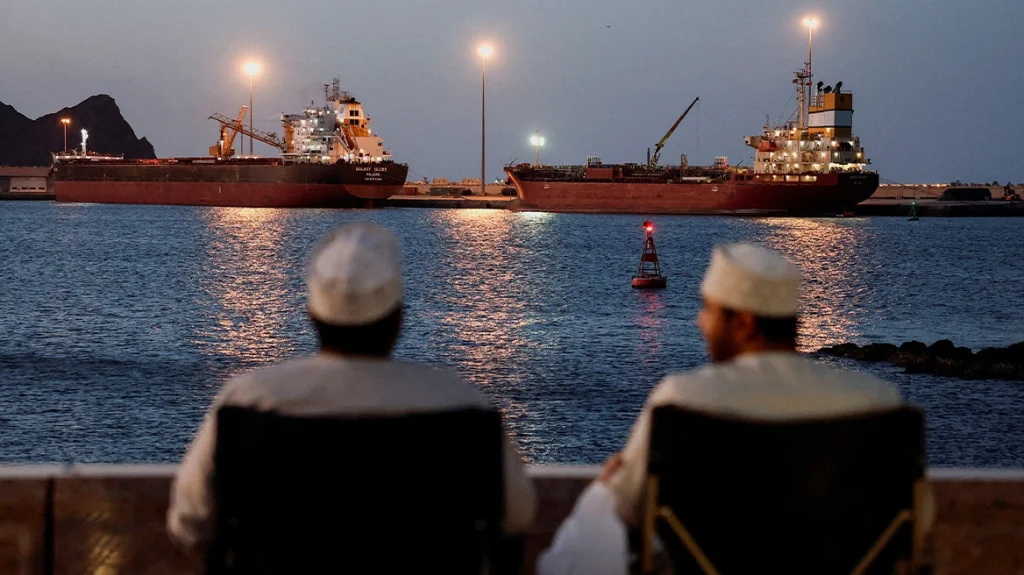
The United Kingdom has led an online meeting where representatives of over 40 countries discussed the Strait of Hormuz crisis and after the meeting, the "immediate and unconditional reopening" of this key global trade route was called for.
The Minister of Foreign Affairs and Diaspora of Kosovo, Glauk Konjufca, also participated in this meeting.
But the meeting did not produce any concrete progress on this issue.
"Iran is attempting to hold the world economy hostage in the Strait of Hormuz. They must not succeed," British Foreign Secretary Yvette Cooper said in a statement.
"For this reason, the partners today called for the immediate and unconditional reopening of the strait and respect for the fundamental principles of freedom of navigation and the law of the sea," she added.
Strait of Hormuz
About 20 percent of the world's crude oil flows through the Strait of Hormuz, a critical strait between Oman and Iran. Shipping through the strait has declined sharply due to the conflict in the region.
The Strait of Hormuz has been almost completely closed since the start of the United States and Israel's war against Iran on February 28, affecting global supplies of goods including oil, liquefied natural gas and chemical fertilizers.
Meanwhile, Kosovo's chief diplomat Konjufca, through a Facebook post, reiterated the call of the states participating in the meeting for the reopening of Hormuz.
"Disruptions to these vital routes are not just regional issues, but directly affect the economies and stability of many countries, including our own. They affect global supply chains, energy prices, and economic security in general. For this reason, international action is essential to guarantee the stability and normal functioning of these strategic corridors," Konjufca wrote.
The closure of the strait has led to a significant increase in energy prices, including in Kosovo.
Also, the chief diplomats and representatives of over 40 countries who participated in the online meeting discussed a number of areas of "possible collective and coordinated action," said British chief diplomat Cooper.
This could include increasing diplomatic pressure, including through the United Nations, but also sanctions, she said.
Also on Thursday, the Gulf Cooperation Council called on the UN Security Council to authorize the use of force to protect Hormuz.
Bahrain proposed a draft resolution that calls for the use of "all means" by states to ensure free shipping through the Strait of Hormuz.
However, the move has divided the 15-member Security Council, with Russia, China and France – which have veto power – expressing strong opposition.
The virtual meeting hosted by Britain was held after US President Donald Trump called on oil-importing countries to show "courage" and seize the strait.
“The countries of the world that … get oil through the Strait of Hormuz need to take care of that passage,” Trump said during an address to the nation on Wednesday. Donald Trump said in a prime-time address late Wednesday.
"Just take it, protect it, use it for yourself," he added.
 OSCE: The espionage case against Djukanovic is an individual matter, we respect the court's decision
  Three Congressmen Present Resolution in US Congress in Support of Kosovo's Membership in NATO
  Vučić openly threatens: We will fight against Kosovo's membership in NATO
  "Violence and threats", Serbia sinks in the Press Freedom Index, the weakest in the Western Balkans
  Albania to reopen Aviation School after almost 20 years
  Serbia blocks funds for Albanians in the Valley, Government: We have notified the EU and internationals