
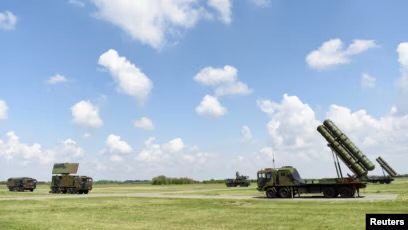
Serbia and Uzbekistan have announced cooperation in the field of long-range ballistic missile production, while a former Uzbek diplomat and analyst has raised questions about the interests that may lie behind this partnership.
Serbian President Aleksandar Vučić made the announcement on September 8, during the Serbia-Uzbekistan Business Forum in Belgrade, as part of the visit of Uzbek President Shavkat Mirziyoyev. Vučić said that Serbia is ready to cooperate with Uzbekistan in this area, while Serbian defense official Nenad Miloradović said that production could start within a year.
However, Serbian and Uzbek authorities have not provided further details about the project. It is not known what range the missiles will have, what purpose they will be used for, or what part of the production the two countries will cooperate on. According to REL, neither Serbia nor Uzbekistan currently produce long-range ballistic missiles.
Uzbek analyst raises questions about Russian interests
Former Uzbek diplomat and political analyst Aliser Taksanov told Radio Free Europe's Uzbek service that cooperation between Belgrade and Tashkent cannot be seen in isolation from Russian interests.
"The question arises as to why Uzbekistan needs such missiles and who its potential adversary would be," Taksanov said.
He also claimed that some products from Uzbekistan end up in Russia and are used in the production of weapons used in the war against Ukraine. According to his assessment, Uzbekistan's interest in the Balkans may be linked to Russian interests. These are Taksanov's assessments and have not been presented as a conclusion confirmed by Serbian, Uzbek or Russian authorities.
Another element of relations with Moscow was highlighted during Vučić’s meeting with Mirziyoyev in Belgrade. Vučić told the Uzbek president: “We both know Putin well,” while Mirziyoyev and Uzbek Foreign Minister Bahyjor Saidov nodded.
Uzbekistan signed a strategic military partnership agreement with Russia in 2025, while its army continues to use missile systems of Soviet origin. At the same time, according to SIPRI data cited by REL, China has been the main source of Uzbekistan's military imports over the past five years.
Serbia deepens military cooperation with China
The warning about missile production with Uzbekistan comes at a time when Serbia is expanding its military capabilities through cooperation with China.
REL has reported that China has become Serbia's largest military supplier over the past five years. Belgrade has purchased various weapons systems from Beijing, including FK-3 anti-aircraft systems and combat drones.
In March this year, Vučić also confirmed that Serbia had purchased CM-400AKG missiles from China, which he described as hypersonic missiles. According to his statements, these missiles can hit targets at distances of up to 200 or 400 kilometers, depending on the configuration.
Their purchase sparked reactions in Croatia. President Zoran Milanović said he did not understand why Serbia was equipping itself with offensive weapons, while Prime Minister Andrej Plenkovic raised the issue with NATO Secretary General Mark Rutte.
Vučić then responded by claiming that Serbia was preparing for the possibility of an attack by an alliance that, according to him, is being formed by Pristina, Tirana and Zagreb. His claim was not accompanied by evidence of the existence of such an attack plan.
Serbia and Croatia increase missile capabilities
The Serbian warning about missile production came just days after Croatia announced the purchase of 18 South Korean K239 Chunmoo missile systems.
On September 14, manufacturer Hanwha Aerospace confirmed the signing of a contract with the Croatian Ministry of Defense for 18 Chunmoo systems, along with ammunition and support vehicles.
Croatian Prime Minister Andrej Plenkovic has linked the decision to the changing security environment in Europe and the need to modernize the Croatian military.
Military analyst Marinko Ogorec has linked the growth of Serbia's and Croatia's missile capabilities to the changing security circumstances in Europe and to what he calls a "security dilemma": the growth of one state's armaments could prompt neighboring states to increase their capabilities.
Another element of this regional context is the Declaration on Cooperation in the Field of Defense and Security, signed in March 2025 by Croatia, Albania, and Kosovo. Serbian officials have presented that agreement as a threat to Serbia's security.
Against this backdrop, Serbia is simultaneously developing military cooperation with China, maintaining close ties with Russia, and continuing to declare its intention to join the European Union. Meanwhile, the announced agreement with Uzbekistan remains without many concrete details, and Russia's role in this project has not been confirmed by the authorities. /The Geopost/
 After the statement about "ethnic cleansing", Paunovic and Dacic sing nationalist songs about Kosovo together
 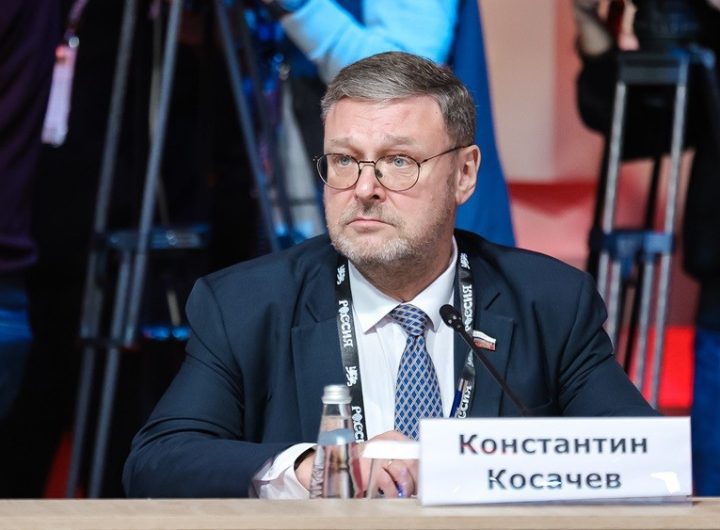 Who is Konstantin Kosachev, the Russian who initiated the motion that led to Dick Marty's report on the Special Court?
  Instead of humanitarian work, the Orthodox brotherhoods are dealing with Mladic, Jadran, Prevlaka, Srebrenica...
  Disinformation on Instagram: Images from Pristina were falsely presented as movement towards North Mitrovica
 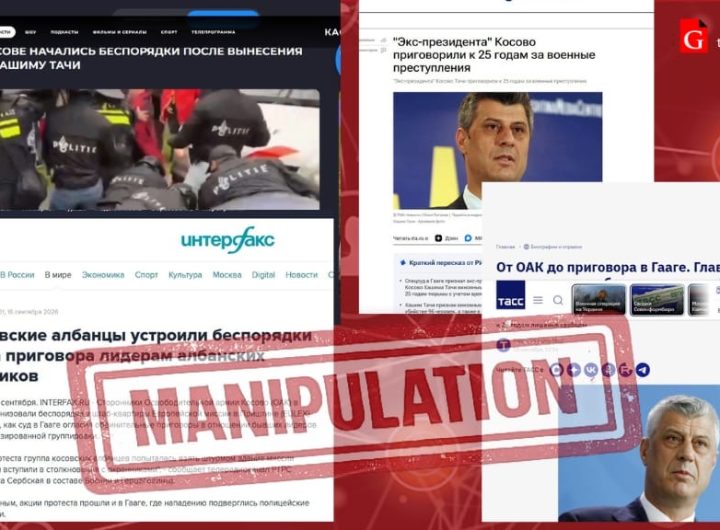 Propaganda from Moscow: How Russian media used The Hague verdicts against KLA leaders to attack the West
 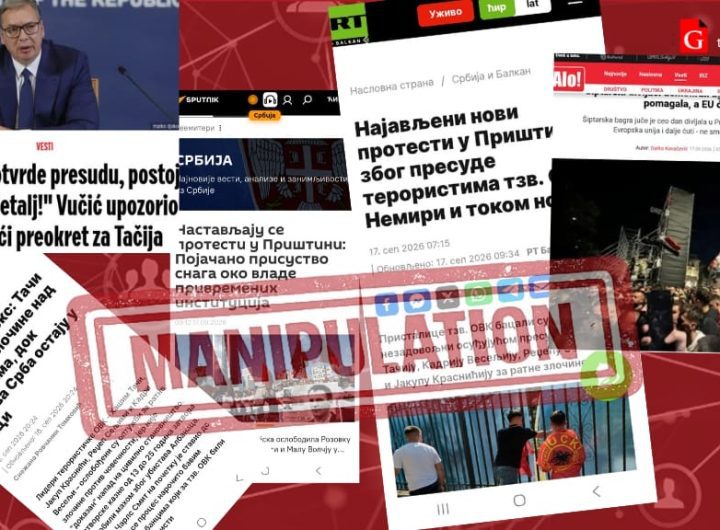 How Serbian media distorted the protest in Pristina