
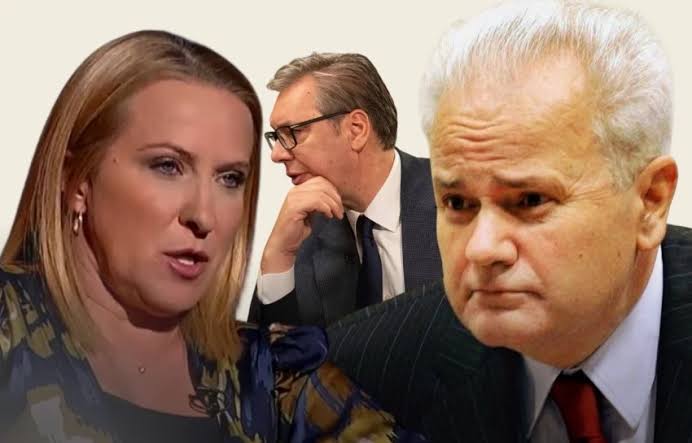
Paunović's statement was not a slip of the tongue. Anyone familiar with Serbia's pro-government media knows that such rhetoric has become part of the political mainstream.
It has been almost two weeks since Serbia's Minister of Public Administration and Local Self-Government, Snezana Paunović, declared that, if she had been in Slobodan Milošević's position, she would have "ethnically cleansed Kosovo."
Despite the anger expressed both at home and abroad, almost nothing has changed in Serbia.
The minister has not resigned. The prime minister has remained silent. President Aleksandar Vučić has simply continued campaigning for parliamentary elections, whenever they are finally announced.
Instead of apologizing, Paunović tried to clarify her remarks. She claimed she had simply used an “unfortunate term” and had actually meant “voluntary deportation.”
However, what exactly "voluntary deportation" is, the minister never bothered to explain.
Just days after her shocking statement, another story emerged. While feeding the Serbian public stories of ethnic cleansing as a solution, the media revealed that Paunović continued to receive a salary as interim director of the Peja Institute of Pharmacy for four years after the institution itself had been dissolved by a decision of the Serbian Government.
According to media reports, she received more than 146,000 euros from Serbian taxpayers while officially running an institution that no longer exists.
There's something painfully familiar about this.
In Serbia, those who build their political careers by proclaiming themselves to be the ultimate defenders of Kosovo often seem to benefit from this role more than anyone else.
Paunović is not a political outsider. Nor is he someone who accidentally found himself in government, like Serbian Prime Minister Đuro Macut.
She is a senior official of the SPS – Slobodan Milosevic's party that, more than three decades after the wars of the 1990s, has never truly broken away from its political legacy.
Neither the Serbian Progressive Party nor President Vučić, in this case, have done this.
This is precisely why Snežana Paunović is the most honest minister in Vučić's Serbia.
For years, nationalist rhetoric has not been a political obstacle in Serbia. More often than not, it has been a path to political progress.
There is equally little reason to be surprised that such a statement comes from a government whose commitment to regional reconciliation has been repeatedly questioned.
Recently, even the summit of Western Balkan leaders in Tivat, a meeting intended to promote European integration and regional cooperation, was overshadowed by incidents that further fueled tensions instead of trust.
Paunović's statement was not a linguistic error.
Anyone familiar with Serbia's pro-government media landscape knows that this kind of rhetoric has become part of the political mainstream. References to enemies, traitors, foreign mercenaries, and existential threats dominate public discourse with alarming regularity. Against this backdrop, it is not surprising that the government seems to assume that this controversy will soon fade away, replaced by yet another fabricated political distraction.
But Paunović's statement carries another message.
It is a message to those European capitals that continue to insist that Serbia must move forward in its EU accession process, despite growing evidence of democratic backwardness.
How many more signals need to come from Belgrade before it becomes clear where the problem lies?
How many more ministers need to speak the language of the 1990s before it is accepted that European values are not absorbed simply by adopting European legislation?
If, after all this, some EU member states still choose to reward this government with further progress in the accession process, they will no longer be able to claim that they did not know who they were rewarding.
The GeoPost
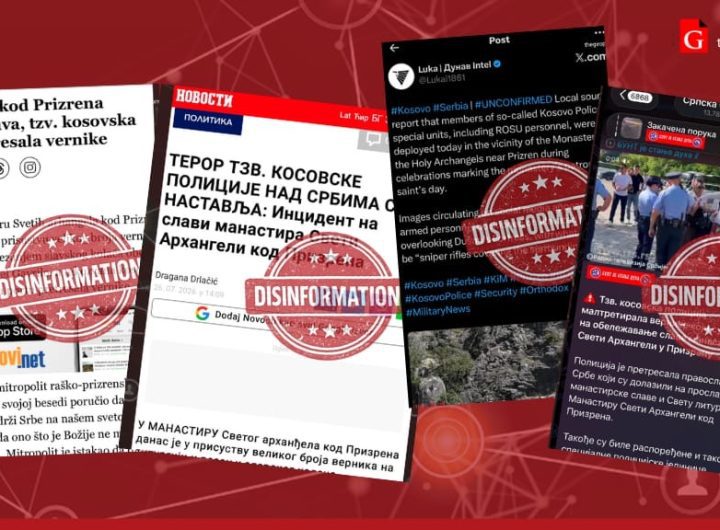 Facts refute Belgrade's narratives: How the security check at the Monastery near Prizren was misinformed by Serbian media
  Vučić's Aesthetics of Evil: When Crime Becomes a State Value
  Europol and the new anti-terrorism algorithm
 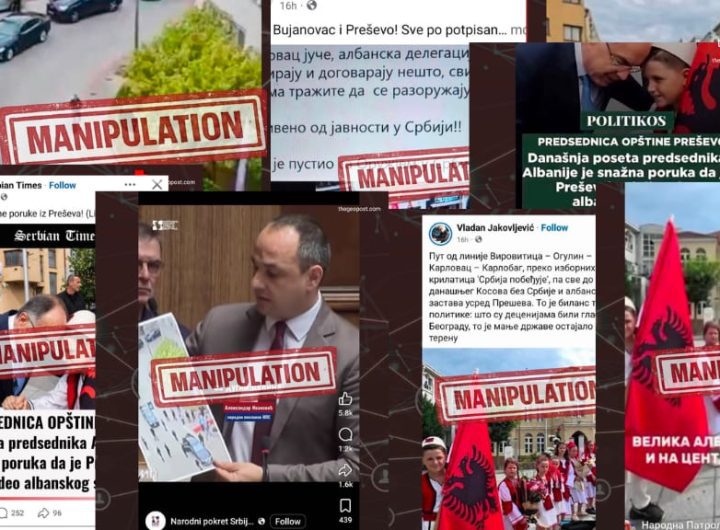 How the Albanian President's visit to Presheva and Bujanovac turned into a narrative of "invasion" and "Greater Albania"
 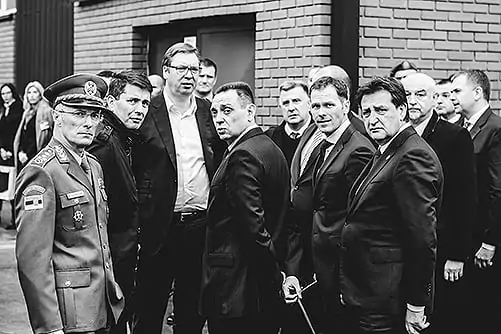 "Mafia State": Why Today's Serbia Resembles Palermo of the 70s
 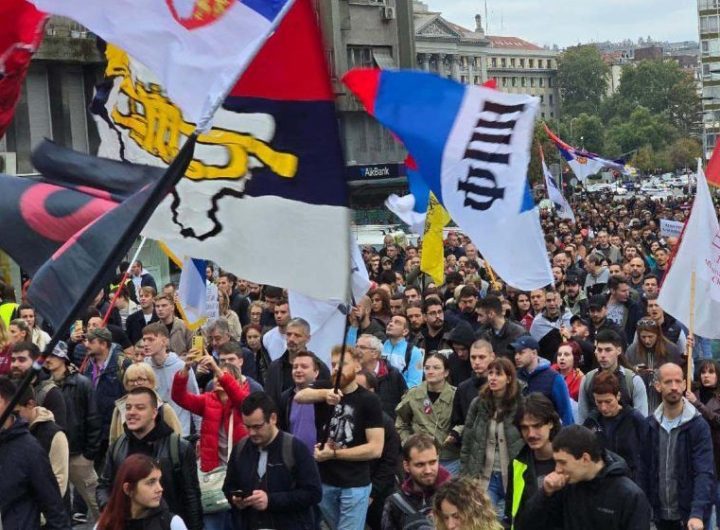 Serbian students refute Belgrade's propaganda after visiting Kosovo: They lied to us, Serbs are not oppressed