
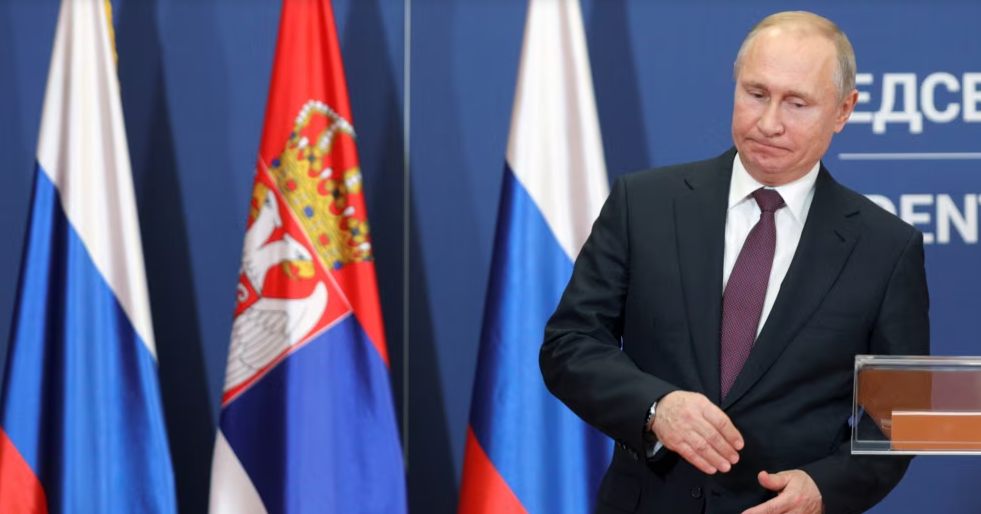
Pro-Russian narratives, new Russian parties, and accusations that Moscow is trying to unite pro-Russian forces are present ahead of Serbia's October snap parliamentary elections.
With messages from Moscow about the possibility of a "color revolution" after the vote in Serbia, a candidate for membership in the European Union, which refuses to impose sanctions on Russia for its invasion of Ukraine.
Several US congressmen have warned that Russia could be an active player in Serbian elections, and the European Parliament has also highlighted Russian influence operations in Serbia, while Belgrade maintains close ties to the Kremlin.
"Russia is making its best resources, tactics, and methods available to monitor, suppress, and disrupt the citizens of Serbia, as well as the strong student movement that wants to restore the rule of law in the country," Republican Congressman Joe Wilson told REL.
Wilson has stated in previous speeches that Russia and the security apparatus in Serbia "are already trying to manipulate the elections."
He mentioned the manipulation of voter lists, propaganda, the use of state resources for political purposes, and the placing of all media under state control.
The fact that Serbia did not join the EU's common foreign policy in imposing sanctions on Russia is one of the reasons for the practical halt to the country's European integration over the past five years.
The snap parliamentary elections on October 25 are the first serious test for populist President Aleksandar Vučić, after 14 years of uncontested rule.
Vucic, who aims to move to the position of prime minister, is facing two years of protests over the deaths of 16 people in a tent collapse in Novi Sad.
His challenger in the election is the student list "Students of Victory", whose candidates are supported by the students who led the protests.
Authorities in Serbia define these protests as an attempt at a "color revolution," while at the same time officials in Belgrade and Moscow say they are engaged in opposing "color revolutions."
Precisely because of ties to Russia, China, and Iran, but also because of the decline of democracy, Republican Joe Wilson, together with Democrat Bill Keating, drafted a bill in the House of Representatives that calls for measures for Serbia.
Wilson reminds us that Russia succeeded in interfering in elections in Georgia, where the pro-Russian Georgian Dream party is in power, but not in Hungary, Moldova, or Romania.
"We will monitor the situation closely to make sure this does not succeed in Serbia," Wilson told him.
In Georgia, a country in the Caucasus between Europe and Asia, the pro-Russian Georgian Dream party is in power and its EU accession was stalled in 2024 after the adoption of a controversial law on “transparency of foreign influence.”
In this former Soviet republic, protesters have been on the streets for the past two years, resisting what they see as the country's democratic collapse.
The International Federation for Fair Elections and Democracy (ISFED) highlighted that, despite statements by senior Russian officials that Russia was not interfering in the Georgian elections, a coordinated Russian information campaign was being conducted before and after the 2024 parliamentary elections in Georgia.
According to their allegations, the main disinformation spread by Russia during the pre-election period was related to the West's alleged plan to organize a "color revolution" in Georgia and an attempt to change the government.
For Moscow, a change of government would mean uncertainty.
A message about a possible "color revolution" scenario in Serbia was sent by the Russian ambassador to Belgrade, Alexander Bocan Kharchenko, on the eve of the elections.
He said in mid-August that Serbia's leadership could not eliminate the risk that after the vote, regardless of the results, "the well-known scenario of a 'color revolution' could be triggered."
The Russian ambassador later told the Russian state news agency Vesti that the EU's interest was to find a puppet for a new leader who would "unquestioningly fulfill all the wishes of the European Union, ignoring public opinion and internal factors."
The Kremlin previously said it could not rule out the possibility that anti-government protests in Serbia constituted an attempt at a "color revolution," in response to clashes between protesters and police in June 2025.
Srdan Cvijic from the non-governmental organization Belgrade Center for Security Policy (BCBP) tells REL that in relations between Belgrade and Moscow there is a common political-security interest in preserving the existing model of governance and in presenting mass civil protests as externally caused destabilization.
“For Moscow, a change of government would mean uncertainty, because a future government with stronger institutions, greater parliamentary control would be a less predictable partner and would have less room for personalized political and security agreements with the Kremlin,” he says.
Luke Coffey from the American Hudson Institute also estimates that Moscow probably prefers the status quo in Serbia.
"At the same time, the Kremlin has shown that it is willing to cooperate with whoever is in power in Belgrade," he adds.
Precisely by invoking traditional friendship, but also gas dependence, the authorities in Belgrade refuse to join the EU in imposing sanctions on Russia for its invasion of Ukraine.
While the country depends largely on Russian gas imports, Russian state-owned company Gazpromneft is the main owner of the Oil Industry of Serbia (NIS).
Negotiations for the sale of NIS, which is under US sanctions due to Russian ownership, have dragged on for months, with speculation that Moscow is not happy with the sale until the election winner is known.
Luke Coffey believes that Serbia has long been an important stronghold of Russian influence in the Balkans.
"And it is unlikely that even a change of government in the short term will significantly reduce this impact," he adds.
Serbia's Ministry of Foreign Affairs did not respond to Radio Free Europe's question about whether they had any knowledge of Russian interference in the election.
How can Russia influence the election?
Srdan Cvijic from BCSP says that the most visible channel of Russian influence is the information space.
"Moscow is influencing the outcome of the election through its disinformation campaign, primarily on social media, but also through regime media, as well as Sputnik and RT," he said.
REL previously determined that pro-Russian narratives in Serbia are being spread through anonymous social media accounts and portals that broadcast their content, as well as Russian state media outlets Sputnik and RT.
Thousands of people on Facebook and Instagram follow the page "Govorit Moskva", almost the only content of which is the speeches of Russian President Vladimir Putin translated into Serbian.
In them, Putin extols Russia's alleged successes in invading Ukraine and criticizes the West.
Unlike the EU, Serbia has allowed Russian state media Sputnik and RT to broadcast their programs.
The dust recently rose from a statement by one of the political actors in Serbia regarding Moscow's request to unite Russophile and pro-Russian forces for the elections in Serbia.
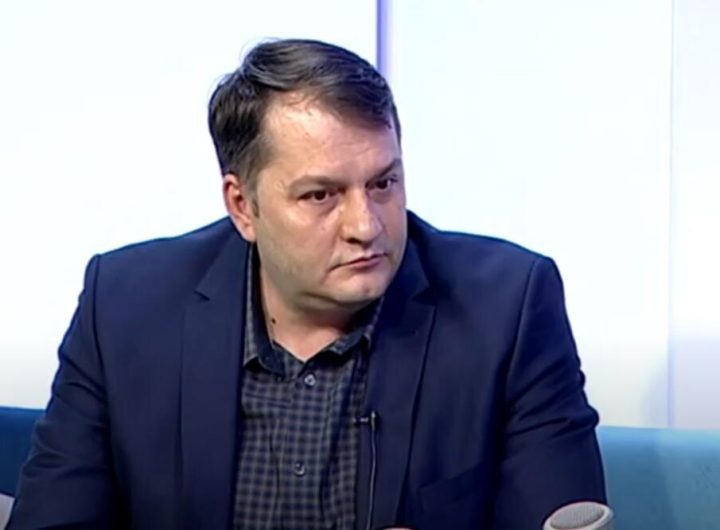
Russian officials have yet to deny the accusations made by the leader of the opposition parliamentary movement "We, the Power of the People", Branimir Nestorović.
“This is a real opportunity for all pro-Russian parties to unite, we can’t wait any longer,” Nestorovic said on September 16, stating that he had been received in Moscow at the “highest level” in late August.
The Russian Embassy in Belgrade did not respond to REL's question regarding these allegations.
Luke Coffey of the Hudson Institute believes that Moscow's direct influence within the Serbian government could be somewhat diminished if there is no openly pro-Russian leader in it.
"And Russia may have to make more efforts to build relations with the new political leadership," he said.
However, Kofi adds that one should not underestimate "the depth and prevalence of pro-Russian sentiments in Serbian society, even among those who simultaneously support maintaining close relations with the West."
He also notes that the student list “Students Win” expressed relatively few views on Serbia’s foreign policy or important regional issues, focusing instead on domestic problems and citizen dissatisfaction.
"Therefore, it remains difficult to assess what approach they would follow if they came to power on issues such as relations with Russia, Bosnia and Herzegovina, Kosovo and Ukraine," Kofi said.
In addition to the political dimension, there is also a security dimension.
Another channel of Russian influence in the elections in Serbia could be political support, says Srđan Cvijić of BCSP, but he claims that there is also a more serious security dimension.
He recalls that in September 2025, Moldovan services announced that Russian intelligence structures, including individuals affiliated with the GRU, organized the training of Moldovan citizens in Serbia to cause mass unrest in the context of the elections in Moldova.
"Which shows that Serbia's territory has already been used for activities that other states have linked to Russian efforts to destabilize the electoral process," says Cvijic.
This particular case is mentioned in the report adopted by the European Parliament in mid-September.
The document says that Serbia has become "a major center of disinformation and a facilitator for Russian and, to a lesser extent, Chinese influence operations."
According to court rulings in Moldova, Serbia and the Bosnian entity Republika Srpska have hosted training camps for militants linked to Russia.
These camps, it was said, were used for training to cause mass unrest during the Moldovan elections and referendum.
The Russian Embassy did not respond to REL's question regarding Washington's and the European Parliament's assessments, nor to the question of how much the Kremlin cares about who will be in power in Serbia.
Belgrade-Moscow connections
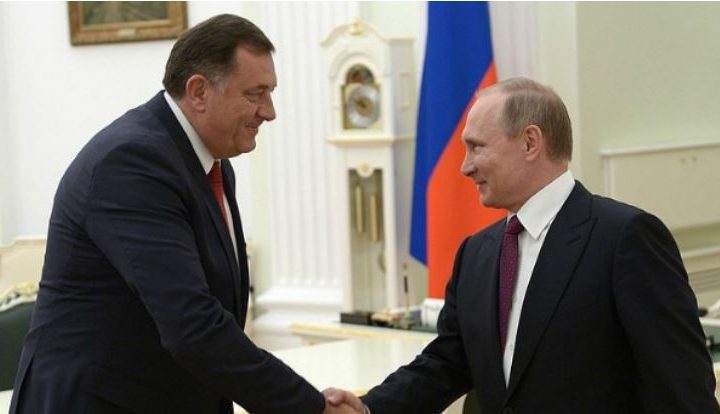
The composition of the Government in Belgrade was the topic of a meeting in May 2016 between then-Prime Minister Aleksandar Vučić and Russian President Vladimir Putin.
Putin then expressed hope that "a worthy place in the new government will be occupied by people who pay considerable attention to the development of interstate relations" between Russia and Serbia.
In those years, the formation of governments was accompanied by speculation about the extent to which Moscow insisted that the Socialist Party of Serbia be part of the government in Serbia.
The Socialists have been coalition partners with Vučić's Serbian Progressive Party since the latter came to power in 2012.
Pro-Russian Aleksandar Vulin from the Movement of Socialists was also a member of several government formations in key departments, such as police and defense.
Vulin left his post as head of the Security Intelligence Agency (BIA) several months after being placed on the US sanctions list, among other things due to his ties to Russia.
During his term in office, he maintained close ties with security structures in Moscow.
The outgoing Serbian government also includes pro-Russian politician and businessman Nenad Popović, who has a network of companies in Russia that engage in various activities.
At the same time, over the past four years, Belgrade has not closed its doors to Russian ministers and MPs, who are under Western sanctions.
Srđan Cvijić from BCSP says that with the loss of pro-Russian people in the Serbian government, Russia would lose direct access to the centers of executive power and some of the political and security influence it exerts through people with developed ties to Moscow.
"It is not the same thing to have general social influence, through free gas, media, historical and cultural ties, and to have interlocutors within the government itself who regularly communicate with the Russian Security Council and other structures and share their views on the internal organization of the government and international relations," says Cvijic.
However, he notes that this does not mean that Russian influence would disappear overnight, but believes that Moscow would lose important institutional channels through which it could directly influence the formulation of foreign and security policy, the public discourse on Russia, and Serbia's stance on European sanctions.
"She would lose not only her 'friends in government', but also part of her ability to influence the direction of state policy from within. Something that the current authorities directly enable her to do," he says.
During a congressional debate in mid-September, bipartisan concerns were expressed about Serbia's relations with Russia and China, and questions were raised about whether the "malign influence" of Moscow and Beijing was discussed within the US-Serbia Strategic Dialogue.
Then, responding to questions from Congressman Daniel Lawton, Deputy Assistant Secretary of State for Europe and Eurasia, speaking about Serbia, said that the US strives to be the first partner in combating the malign influence.
He assessed that American results are yielding results, stating that engagement with this "key country for regional balance" will continue to be of essential importance for protecting US interests.
At the same time, US Secretary of State Marco Rubio stated that Serbia was involved in "potentially explosive issues".
But Rubio, who answered questions from reporters at the United Nations in New York on September 23, did not specify which specific issues he was referring to.
 Student List against Serbian List, but with Belgrade's old policy on Kosovo: "We will not recognize independence"
 American expert warns of the risk of crisis in Bosnia: Russia exploits Dodik's destabilizing actions
 Zahner: Serbia cannot maintain strategic ties with Russia and simultaneously aim for EU membership
 "Russia will survive Vucic" - US official warns of Moscow's networks in Serbia
 Lavrov expects continuation of strategic partnership with Serbia: Russia remains committed to agreements
 Vucic and Radoicic's close associate, Zvonko Veselinovic, flees to Turkey at the time of the arrests in Serbia