
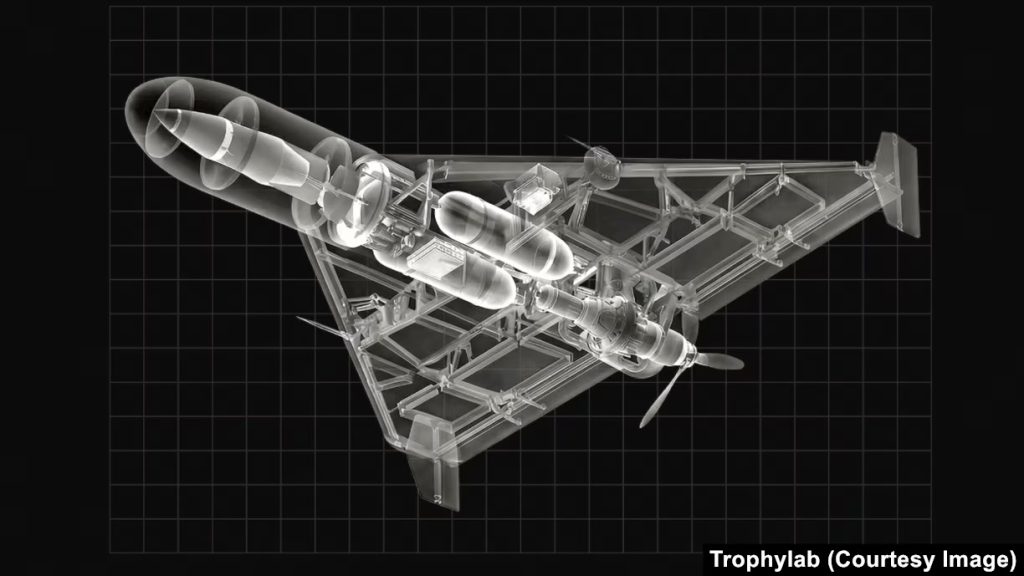
A Ukrainian platform that makes captured Russian and North Korean military equipment available for “destructive testing” and other research has granted access to 376 foreign companies and agencies since it began operating, a spokesperson for the initiative told REL on October 14.
Ukraine’s “Trophylab” was introduced in June as a “common space for research on enemy weapons,” which publishes practical analyses of seized weapons destined for approved Ukrainian and foreign entities. According to analysts, the level of international interest in the platform has the potential to significantly influence the Kremlin’s arms industry.
Anna Harvey, a research fellow at the American Foreign Policy Council, told REL that, in addition to the platform's stated goal of helping develop countermeasures against individual Russian weapons, it is likely that some companies using Trophylab will "rework Russian technology based on captured Ukrainian samples."
Such imitation products, she predicts, could become "direct competitors of Russian manufacturers selling abroad."
Harvey added that foreign entities that may have been exploring potential weapons purchases from Russia can now assess "how these systems actually perform on the battlefield," rather than relying on Russian specifications.
Trophylab holds samples of more than 200 captured objects, including the Russian Kinzhal hypersonic missile, a T-90M tank and the North Korean KN-23 ballistic missile. Those with access can apply to receive equipment for physical testing, up to the point of “complete destruction,” if necessary.
Completed research is uploaded to the portal by users; there, it is checked for “relevance, originality, and scientific value” before being published for all users of the platform to view.
Immediately after its launch, applicants for access to Trophylab were evenly split between Ukrainian and foreign entities, but by August, the platform had received about 130 access requests from Ukraine and more than 300 from abroad. At the time, the Ukrainian Defense Ministry did not disclose how many applicants were granted access.
The Trophylab spokesperson declined to specify the number of foreign countries that currently have access to the research platform, but the organization says that, at the level of government agencies, access is limited only to countries included in a list of 28 states that have signed security agreements and other agreements with Ukraine.
The militaries have long shared what is known as “technical weapons intelligence” with state-level allies, including both sides in the ongoing conflict in Ukraine. Russia, for its part, has supplied North Korea with captured NATO military equipment used by Ukrainian forces and has reportedly shipped advanced Western weapons to Tehran.
But insiders say the democratization represented by Trophylab, in which small startups can use the same research data as defense ministries, is likely to significantly accelerate weapons development in those countries that have access to the intelligence.
In an interview in July, Gus McLachlan, a retired Australian major general, said: “What TrophyLab does for the first time is it makes [search for captured weapons] widely available to innovation organisations, technology companies and the defence industry in a way that we haven’t seen before.”/REL
 From Marovic to Radoicic: The wanted men who are not extradited
  Germany supports Ukrainian attacks inside Russian territory
  Turkey to increase weapons and ammunition funding by 229 percent in 2027
  Fico at Vučić's rally: Slovakia will not disappoint you on Kosovo
  Ukraine is paralyzing Russian airports with attacks
  Ukrainian drones forced the closure of all four Moscow airports overnight – dozens of flights were canceled