
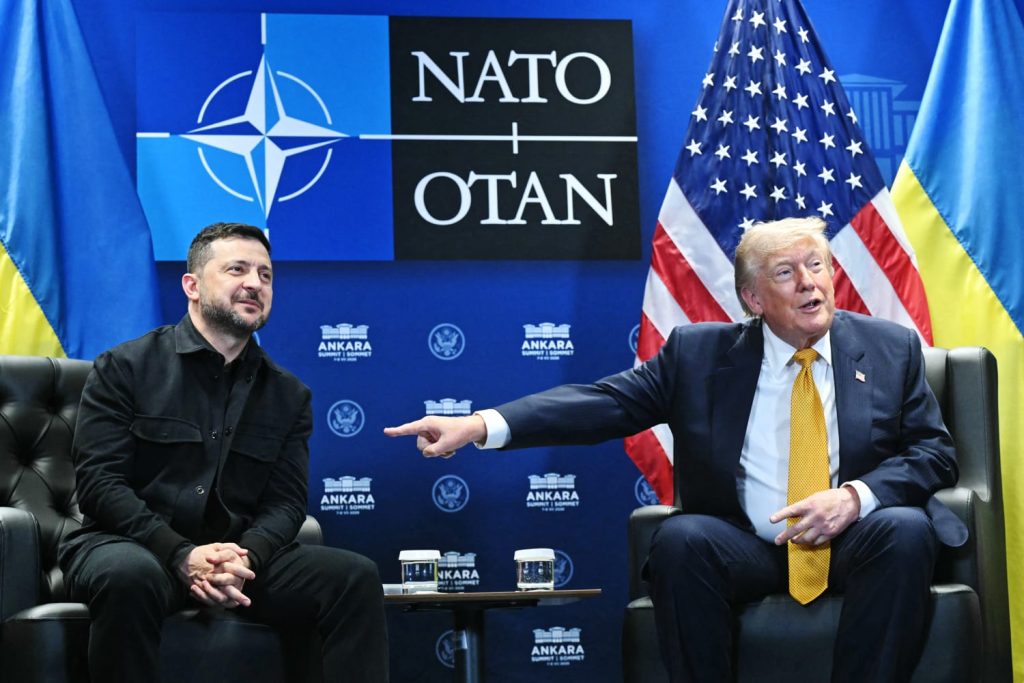
United States President Donald Trump may consider offering security guarantees to Ukraine - similar to NATO's collective defense commitments - if he is convinced that the risk of another Russian invasion is sufficiently reduced, special envoy Jared Kushner said.
In a lengthy post on the X platform on November 22, Kushner described Russia's reported willingness to discuss such guarantees as "a big step forward" and a possible indication that Moscow is serious about achieving peace.
Publicly, Moscow has opposed security guarantees for Ukraine, similar to those of NATO.
Last week, Russian Deputy Foreign Minister Sergei Ryabkov called them unacceptable, raising questions about the way Kushner presented Moscow's position.
Kushner did not confirm any specific US commitment, stressing that any proposed guarantees would have to be approved by Trump, in accordance with US constitutional and congressional procedures.
A US official told Radio Free Europe that Kushner's statement is important because of his role in the negotiations.
"The special envoy does not make statements without carefully considering and understanding the positions of all parties involved, especially President Trump, who entrusts him with the conduct of negotiations," the official said.
What is Washington considering?
Kushner said that credible security guarantees, backed by preventive measures and mechanisms to avoid military escalation, "could significantly reduce the risk of another war."
He agreed with Ukrainian President Volodymyr Zelensky that the guarantees must be "concrete, credible and clearly documented."
Kushner proposed a broader framework, which would include permanent channels of consultation, communication during crises, mechanisms for avoiding military incidents, transparency, and mutual measures to reduce the risk of escalation.
According to him, the goal should be a future where "Ukraine is secure, Europe is stronger, Russia is confident that NATO does not seek confrontation, and NATO and its partners are confident that Russia will respect the sovereignty and security of its neighbors."
He stressed that security guarantees for Ukraine cannot be finalized in isolation from the broader post-war European security architecture and that any agreement must preserve the sovereignty and decision-making independence of the participating states.
Kushner also argued that long-term security requires economic strength and a credible plan for Ukraine's development and prosperity, including reforms that would strengthen its institutions, economy, and ability to rely on its own resources.
Referring to Trump's conversation with leaders of the Coalition of the Willing, he said that the hundreds of billions of dollars being spent on war could be invested in job creation, economic growth, lower energy prices, and infrastructure.
He said Washington intends to work with Kiev, European partners and Moscow over the coming weeks to draft the proposed agreements.
Zelensky demands more guarantees
Kushner's post came after recent statements by Ukrainian President Volodymyr Zelensky following a meeting of the Coalition of the Willing in Berlin.
Zelensky said that full NATO membership remains the clearest guarantee of security for his country and that such a step would also strengthen the alliance itself.
He raised questions about what an alternative agreement, similar to NATO's Article 5, would mean in practice, including which countries would participate, how they would defend Ukraine, and whether they would be prepared to repel another Russian attack.
According to him, the answers to these issues should be set out in writing and not remain just general political promises.
Zelensky also insisted that security guarantees remain in effect even after Trump's presidential term ends.
He said that Ukraine needs long-term commitments, not just for the next two years.
"This is not a lasting peace. This is a two-year pause," Zelensky said.
Moscow's opposition
Daniel Fried, former US assistant secretary of state for Europe and Eurasia who served during seven US administrations, told Radio Free Europe that he sees no evidence that Moscow is willing to discuss such guarantees.
"I would like to hear the Russians say that. They haven't," Fried said, referring to Ryabkov's public statements and Russia's continued maximalist goals in the war.
He warned that willingness to discuss a proposal should not be confused with its acceptance.
"The word 'discussion' is being used to mean much more than has been confirmed," he said.
According to Fried, a genuine security guarantee, similar to NATO's Article 5, would mean that the US and key European countries, potentially including members of the Coalition of the Willing, pledge that an attack on Ukraine would be treated as an attack on all.
"This would be an issue of very great importance," he said.
Such an agreement could work, Fried added, but Russia could oppose it. According to him, full membership of Ukraine in NATO would be the most favorable solution for Kiev.
Fried also questioned whether Kushner was presenting a policy already approved by the US administration or trying to secure Trump's support for a proposal.
"It would have been much better if he had said that Donald Trump supports this guarantee, in accordance with constitutional and congressional procedures," Fried said.
"It seems like Jared Kushner is trying to maintain a difficult balance and create facts on the ground to present to Trump, rather than expressing a position of the US Government," he added.
The Pentagon's vision for NATO
Fried also asked whether potential American security guarantees for Ukraine align with the priorities of Elbridge Colby, the senior Pentagon official responsible for defense policy.
In a social media post on November 22, Colby spoke about the transition to what he called "NATO 3.0," arguing that European allies should take the lead in conventional defense within the alliance.
Colby said that US support for Ukraine should focus on helping to hold front lines and carry out associated attacks at medium distances.
According to him, this is the most effective way to strengthen Ukraine's defense and create the conditions for a lasting peace.
Colby said that the shift towards a conventional defense led by European countries is already yielding results, as US allies are showing that they have the industrial capacity and political will to take on more responsibility.
However, according to Fried, these priorities raise questions about how Washington can reduce its military role in Europe and, at the same time, take on new obligations important to Ukraine's security.
"If we are going to take on additional security obligations, like guarantees for Ukraine similar to NATO's Article 5, I want to know how many additional forces will be needed and how that will be accomplished," he said.
Fried warned that negotiations on reciprocal measures aimed at reducing tensions could give Moscow the opportunity to present its demands.
Despite reservations, Fried said Kushner's post contains concrete enough proposals to be taken seriously.
"I had not previously taken Kushner's statements about Article 5-like guarantees seriously, but this post goes far enough that it makes me take them seriously," he said.
Guarantees must be reliable
Christina Kvien, former director for Europe at the US National Security Council and former charge d'affaires at the US Embassy in Ukraine, was more skeptical.
Kvien, who is currently president of the Pacific Council on International Policy, told Radio Free Europe that the phrase "NATO Article 5-like guarantees" is too vague, unless concrete and enforceable mechanisms for guaranteeing security are defined.
She also questioned Kushner's claim that Russia is willing to discuss such an agreement, especially after the opposition expressed by Ryabkov.
According to her, even a written commitment would only be credible if Washington was willing to implement it.
"The Trump administration has not built the trust necessary to guarantee that this commitment will be honored," said Kvien.
"The most reliable security guarantee for Ukraine is full membership in NATO," she added.
Kushner stressed that the proposed security guarantees, along with economic recovery and a broader European security framework, are intended to create the basis for a lasting peace agreement.
He said the ultimate goal is "a sovereign, secure, prosperous and free Ukraine, a stronger and more stable Europe, and a long-term peace, based on agreements that make another war much less likely."
"Nothing is agreed until the agreement is reached," he stressed.
"But the willingness to discuss these historical issues creates an important opportunity to end the bloodshed," Kushner concluded.
 Fetoshi: Student List in Serbia is facing pressure for a more confrontational approach towards the West and Kosovo
 Germany confirms coordination with the US on the future of KFOR
 Radoicic and Veselinovic brothers used Bosnia to flee Serbia, analysts warn of political and criminal networks
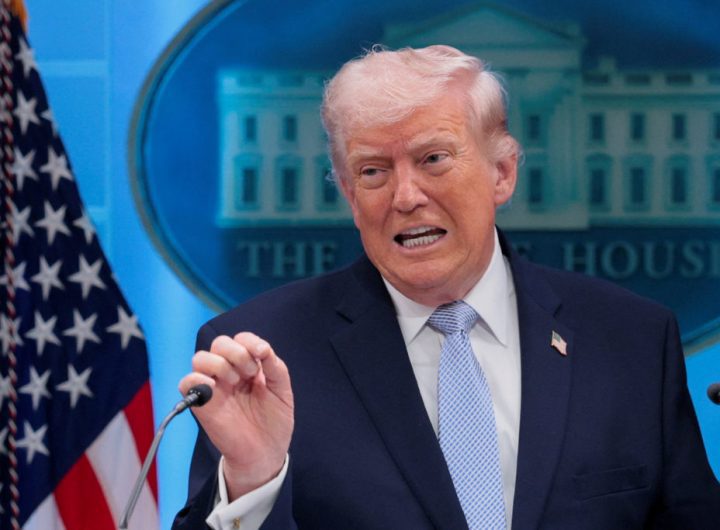 Trump warns of major new attacks on Iran after New Year if diplomacy fails
 Bakic in the Serbian Parliament accuses the former government of links to organized crime, mentions Radoicic, Veselinovic and Belivuk
 Student List continues Vučić's narrative on Kosovo, opposes draft law on cultural heritage