

According to the British Ministry of Defense, around 900,000 Russian soldiers were killed or wounded in the war against Ukraine.
According to the ministry, up to 250,000 of these soldiers were killed.
Russia already has a labor shortage and the Kremlin has invested heavily in recruiting new troops.
Around 900,000 Russian soldiers have been injured or killed since Moscow began its invasion of Ukraine, the British Ministry of Defense wrote in a statement on Thursday.
"Of these, perhaps 200,000 to 250,000 Russian soldiers were killed, Russia's greatest losses since World War II," the ministry wrote.
The statement said the Kremlin is likely to continue to accept heavy losses, depending on two factors: public support for the war and how easily those losses can be replaced.
"Russian President Putin and the Russian military leadership are most likely prioritizing their conflict goals over the lives of Russian soldiers," the ministry wrote.
The ministry's estimates generally coincide with Ukrainian public figures. Kiev announced on Thursday that about 900,000 Russian soldiers were wounded or killed in the war.
The UK Ministry of Defence has not provided any further information or analysis on Russian war casualties.
The Russian Defense Ministry did not respond to a Business Insider request for comment outside normal business hours.
An estimate by then-US Secretary of Defense Lloyd Austin in January put the number of wounded and killed in Russia at around 700,000.
Meanwhile, perhaps over 400,000 Ukrainian soldiers have been wounded or killed. Ukrainian President Volodymyr Zelenskyy said in February that about 46,000 of his soldiers were killed and 380,000 were wounded.
UA Losses, an open-source research site that calculates war casualties based on news articles and social media posts, estimates that about 65,000 Ukrainian soldiers have been killed and another 55,000 are missing.
How Russia's losses affect its economy
Both Ukraine and Russia are struggling to replenish their armed forces as the war drags on beyond its third year. Kiev is broadening its criteria for recruiting conscripts, while Moscow is pouring money into contracts to attract new soldiers.
The Kremlin has managed to increase recruitment rates in the second half of 2024, but it spends almost a third of its entire budget on defense.
The constant supply of skilled soldiers to the battlefield has been key to Russia's main strategy for about a year, which is to carry out massive infantry attacks to wear down Ukraine. This costly tactic has produced limited results on the Eastern Front, although it has helped gradually push Ukraine away from Kursk in the north.
“The RF is struggling with some material impoverishment after heavy losses in the fall,” Michael Kofman, a senior defense analyst at the Carnegie Endowment Fund, wrote in a note on Thursday.
“But current RF contracts continue to provide for replacements and allow for rotations,” Kofman added, referring to the Russian armed forces.
Some Russian industries also face severe labor shortages amounting to about 5 million workers, partly due to the mass conscription of soldiers and the exodus of wealthier Russians who left the country at the start of the war.
Business leaders highlighted these obstacles in a meeting with Russian President Vladimir Putin on Tuesday.
Some called for further government investment and floated the idea of limiting part-time work in favor of full-time jobs, as Alexander Shokhin, president of the Russian Union of Industrialists and Entrepreneurs, explained in a speech.
The meeting took place against the backdrop of Moscow's negotiations with the Trump administration, which have raised hopes that the Russian economy will receive some form of relief from sanctions and an easier path to recovery.
However, Putin tried to dampen these expectations at the meeting by urging businessmen not to view the sanctions as temporary, but as "systematic, strategic pressure" on their country.
"Let me repeat: sanctions and restrictions are the reality of today's new stage of development into which the whole world, the entire global economy, has entered," Putin said.
 Radar publishes exclusive documents on secret surveillance of Vucic's critics by the BIA
 Vučić pardoned 49 people before leaving the presidency, the list includes former officials and people involved in incidents
 "They were collecting votes for Vučić's SNS", lawyer Ninić files criminal charges against eight BIA officials
 Organized Crime Prosecutor's Office Urgently Requests Documentation on Pardons Granted by Vučić
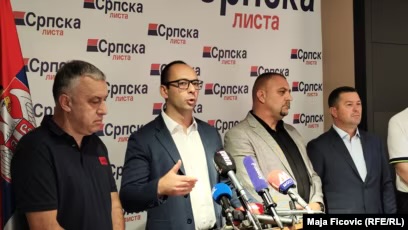 After Vučić's defeat, Serbian List vows to maintain institutional ties with Belgrade
 Student List will not cooperate with Serbian List: Gashiq says it was a “contractor of the SNS” in Kosovo