
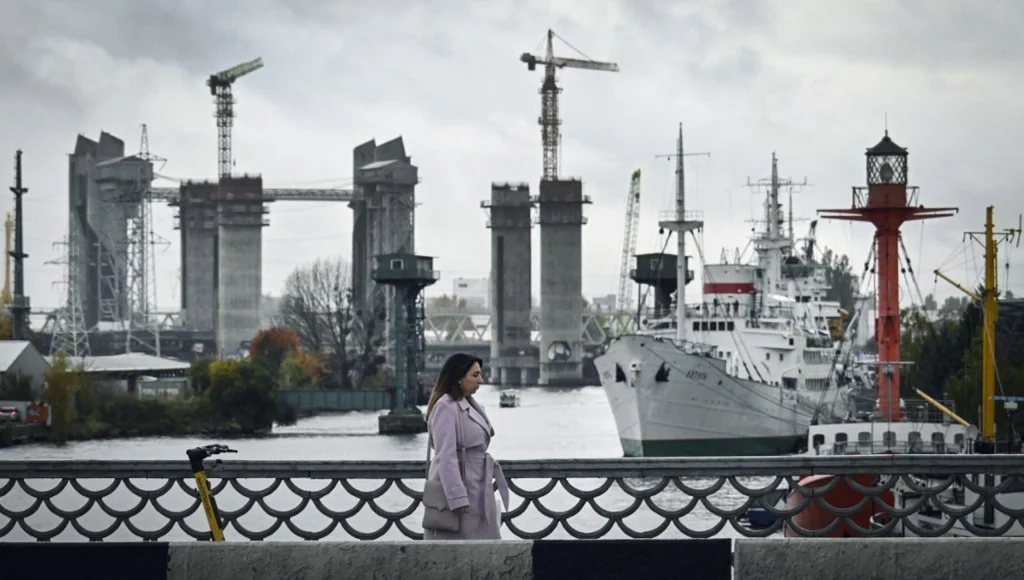
NATO has responded to the Kremlin's warning yesterday that Moscow was ready to use its entire arsenal of weapons to defend Kaliningrad if the alliance tried to blockade the region.
NATO spokeswoman Allison Hart said the alliance responded to Russia's unofficial diplomatic document. A military source separately confirmed to The Reporter, formerly known as Euractiv, that the document was about Kaliningrad.
"Russia's use of hybrid tactics is a sign of desperation. But we will not be deterred from our support for Ukraine," Hart said, adding that "we [NATO] have what it takes to defend every inch of allied territory and to remain strong, ready and able to counter any threat."
She reiterated that NATO is exclusively a defensive alliance and that none of its exercises or other activities pose a threat to any part of Russia, while also condemning "the threat of force, including any irresponsible nuclear rhetoric."
Why does Kaliningrad matter?
The enclave is located between Lithuania and Poland, both members of the EU and NATO, making it an ongoing security concern for the alliance.
Approximately 360 kilometers (224 miles) from the Russian mainland, it has no land connection with the rest of Russia and is connected to it only by sea.
The territory was once the German city of Königsberg, the capital of East Prussia. The Soviet Union took it at the end of World War II, expelled its German population and renamed it in 1946.
As a key military base in the Baltics, the city and its port were closed to foreigners throughout the Soviet era. That changed with the collapse of the Soviet Union in 1991, which left Kaliningrad physically separated from Russia after Lithuania regained independence.
Moscow then sought to open the region economically, transforming it into a free trade zone in 1992 and a special economic zone in 1996 with privileges for foreign investors, according to AFP.
Its value to Moscow now remains primarily military, according to the International Crisis Group.
Kaliningrad is Russia's only ice-free port in the Baltic and hosts the headquarters of the Russian Baltic Fleet. Russia has also deployed Iskander tactical missiles there, with a range of about 500 kilometers (310 miles), the US Naval Institute reported.
Meanwhile, NATO has long been concerned that Russia could station non-strategic nuclear weapons in the enclave.
For NATO, the biggest concern remains the Suwalki Gap, a roughly 65-kilometer section of the Polish-Lithuanian border that separates Kaliningrad from Belarus – one of Russia's closest allies.
Despite portraying itself as neutral in the war, Belarus supplies Russia with the components necessary for weapons production, while also providing the territory from which Russia launches several attacks on Ukraine.
If a direct conflict were to arise, Russian forces pushing from Belarus and Kaliningrad could attempt to occupy the corridor and cut off the Baltic states from Allied reinforcements.
The Crisis Group warns that Russia's Baltic Fleet, missiles, air defenses and ground forces in Kaliningrad could also be used to deny NATO access to the Baltic Sea and disrupt air operations.
At the same time, the enclave's position leaves it exposed. With Finland and Sweden joining NATO in 2023 and 2024, the Baltic Sea is now almost entirely surrounded by alliance members, except for Kaliningrad and Russia's coastline near St. Petersburg.
In June 2022, Lithuania banned the rail transit of steel and other EU-sanctioned goods to the enclave, a move that Moscow called a “blockade” and threatened to respond, according to LRT.
Vilnius insisted it was only enforcing EU sanctions, but the impasse was eased the following month when the European Commission ruled that sanctioned goods, except for arms, could continue to pass through Lithuania by rail.
At the time, analysts warned that Russia's definition of the restrictions as a blockade, a term with military connotations, could be used to justify military action.
Moscow's latest threat
In its statement, the Russian embassy said it had conveyed its position to NATO's International Secretariat and the Belgian Foreign Ministry, accusing the alliance and its members of pursuing an "aggressive policy."
"We emphasized that Russia possesses the necessary means to repel potential aggression and is ready to put its entire arsenal of weapons at its disposal if NATO countries try to isolate the Kaliningrad Region from the rest of our country," the statement said.
The embassy called on NATO members to refrain from "further escalating rhetoric and actions in order to prevent a large-scale confrontation," without specifying what actions had prompted the warning.
The warning marks the latest in a series of threats from senior Russian officials to Ukraine's Western allies, raising fears that the Kremlin may be seeking a possible justification for a direct attack on the Baltic states.
Dmitry Medvedev, former president and current deputy chairman of the Russian Security Council, declared on September 11 that Lithuania would “disappear from the map of the world” if it lifted its long-standing ban on nuclear weapons.
He also claimed that NATO would not use Article 5 to defend the country, as that would mean a "global catastrophe."
Kremlin leader Vladimir Putin, for his part, has dismissed European warnings of a Russian threat as deliberate escalation and "provocation," insisting that Moscow has no real incentive to attack Europe.
Moments later, during his most extensive speeches on Friday, September 25, he addressed an early Kremlin grievance: the treatment of Russian-speaking minorities in the Baltic states, which the Kremlin also used to justify launching a full-scale invasion against Ukraine.
At the same time, President Volodymyr Zelensky warned that Russia could directly attack another European country, as Moscow seeks to destroy Western unity and distract attention from its battlefield losses.
Meanwhile, Russian Foreign Minister Sergey Lavrov turned the argument around. At his latest press conference at the 81st United Nations General Assembly (UNGA) in New York, he said that European calls to prepare for a possible war with Russia could become a “self-fulfilling prophecy.”
The GeoPost
 Trump, Xi and Putin hold first trilateral meeting
 Nordics show the way to protect the Arctic
 Putin was elegantly humiliated in China
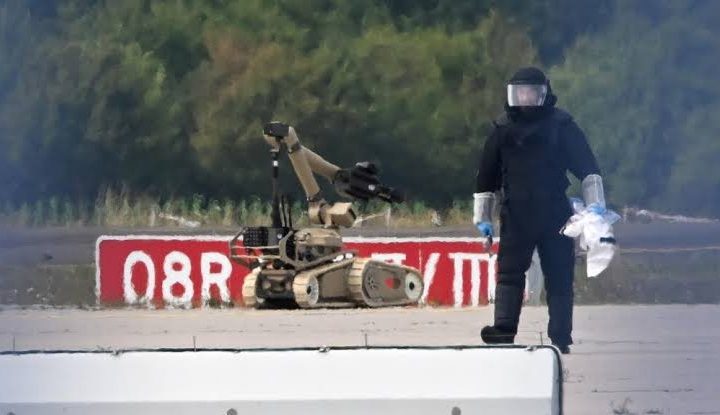 Russia planned a sabotage attack in Poland that would cause many casualties – and blame it on Ukraine
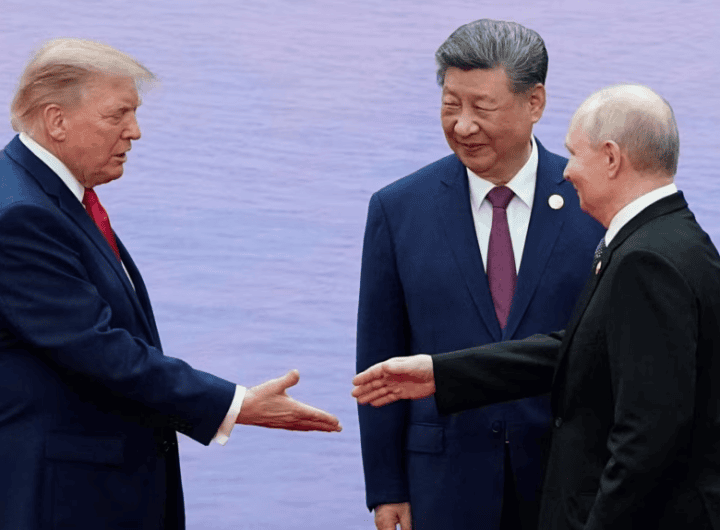 Trump, Xi and Putin at one table: Is a new Yalta being prepared?
 What is expected from the summit between Trump, Xi and Putin?