
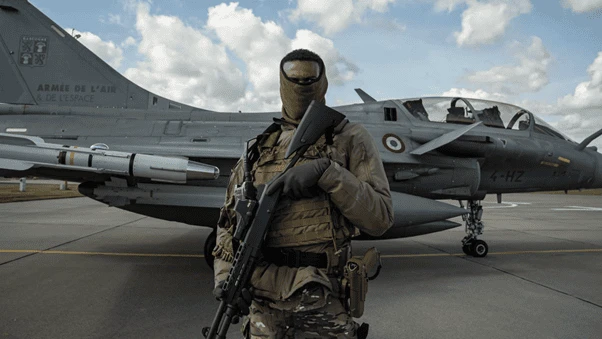
France is trying to position itself as one of Europe's top security leaders, pushing forward major defense initiatives — from nuclear deterrence to military deployments and support for allies. However, behind the ambitious rhetoric, experts warn of real limitations that could affect Paris' ability to meet expectations.
According to recent analyses, Paris has intensified its role in the European defense debate, offering independent nuclear deterrence, discussing the deployment of troops in Ukraine, and increasing its naval presence in strategic regions such as the Middle East. These steps come at a time when the credibility of the United States as a security guarantor in Europe is increasingly being questioned.
France relies on a number of important advantages, including sovereign nuclear deterrence, a strong defense industry, and armed forces experienced in international operations. It also possesses a large fleet of Rafale fighter jets and advanced space intelligence capabilities, which make it an attractive partner for European countries.
In naval terms, the French navy is considered one of the most capable on the continent, capable of projecting power and intervening quickly in crisis zones. Meanwhile, its defense industry supplies not only the domestic army but also a significant portion of its European allies.
However, despite these advantages, experts say the French army faces structural limitations. Parliamentary reports have warned of shortages of personnel, reserves and ammunition, describing it as a “bonsai army” – capable in quality but limited in quantity.
Arms and ammunition reserves are thought to last only a few weeks in the event of a high-intensity conflict, while the pace of industrial production does not match the potential demands of a prolonged war.
In the nuclear field, France relies only on strategic weapons and does not have tactical capabilities, which limits its flexibility in scenarios of gradual escalation.
Besides military constraints, a key factor remains political will.President Emmanuel Macron has expressed willingness to increase France's role in European defense, but domestic political developments and upcoming elections could change the course of foreign policy.
The rise of extreme political forces and internal economic and social crises add to uncertainty about Paris's long-term commitment. Polls show that French public opinion supports rearmament, but is more reserved about direct involvement in conflicts.
Analysts point out that France can provide important support to European allies, especially in areas such as intelligence, air power and nuclear deterrence. However, it cannot fully replace the US role in guaranteeing the continent's security.
For this reason, European countries are advised to plan taking into account limited French support, while at the same time strengthening cooperation with Paris to increase the likelihood of greater engagement in the event of a crisis.
In conclusion, France remains a key actor in the European security architecture, but with capacities and political will that are not unlimited.
The Geopost
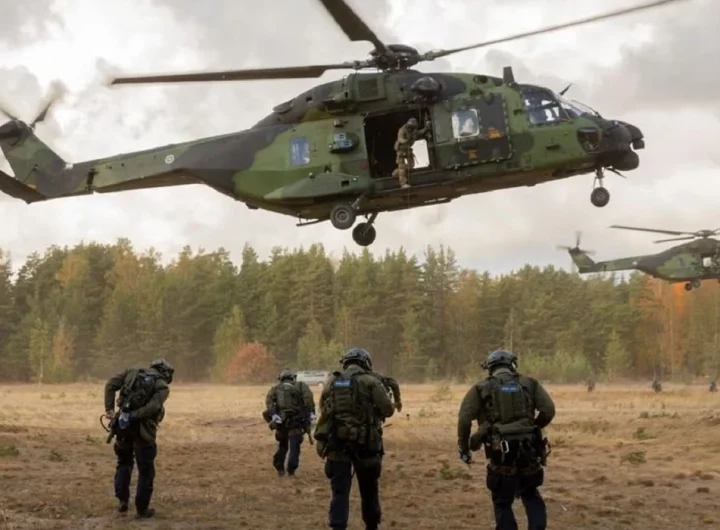 Finland moves troops near Russian border, NATO conducts military exercises
 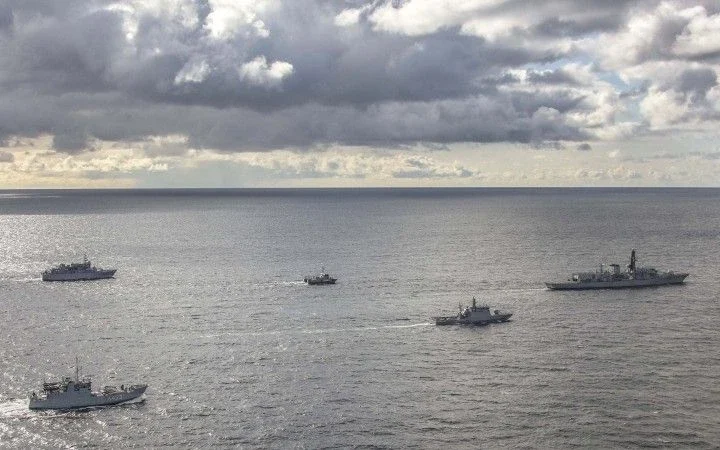 The United Kingdom is forming a new naval alliance in Europe
  Tenzer: Ukraine is winning the war, the West must help
  Germany is now the biggest military spender in Europe – what is it buying the most?
  Trump: We have two options on Iran, I would rather not blow it up
  The US could use a powerful weapon against Iran for the first time – what is “Dark Eagle”?