
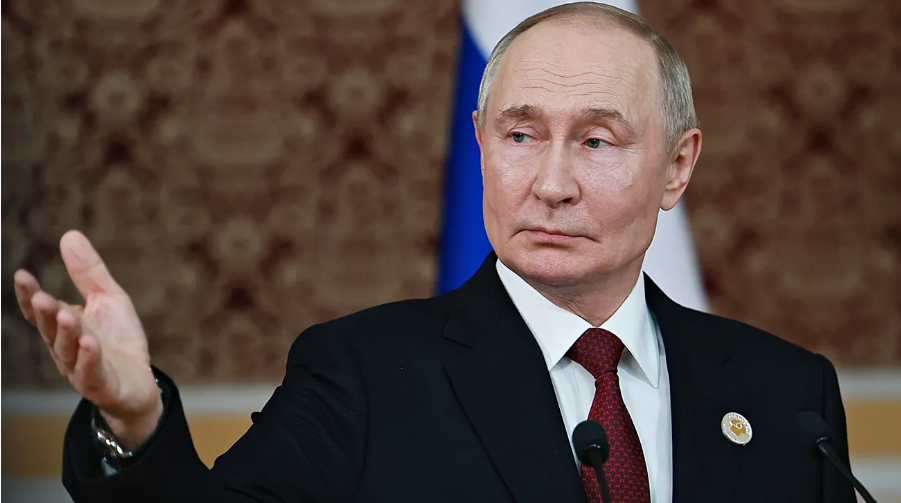
Relations between France and Russia have entered a crucial and irreversible phase, shaped by the war in Ukraine, ideological confrontation and the increasing risk of an escalation with NATO.
The premises that once supported dialogue with Moscow have collapsed, forcing Paris and European allies to reconsider concepts of deterrence and the security architecture in Europe.
This is how journalist and analyst Aurélien Duchêne, author of the book, assesses Putin Against the West, in an interview with Dr. Aleksander Olech, where Russia's long-term strategy, the credibility of NATO's red lines, and France's real capacity to act as a security actor in Europe are discussed.
Duchêne emphasizes that the most underestimated threat that Russia poses to the West is not only military, but also ideological. According to him, Vladimir Putin’s regime is building a social project that feeds the constant confrontation with the West, relying on openly anti-democratic and authoritarian thinkers. He mentions Ivan Ilyin, a favorite ideologue of Putin, who had sympathy for fascism and regimes like those of Mussolini and Franco.
According to Duchêne, Russia is increasingly taking on the features of fascism, including early indoctrination through structures such as the paramilitary youth organization Yunarmiya. Although Russia is not yet totalitarian, it is approaching this model through the systematic destruction of truth and the preparation of society for a direct confrontation with the West.
Despite military losses in Ukraine, economic sanctions, and international isolation, Russia has not collapsed. Duchêne explains that the Russian system has the capacity to absorb pressure by sacrificing the well-being of the population in favor of great power ambitions. He emphasizes that, although the Russian economy faces serious structural problems, including labor shortages and overheating from military spending, the Kremlin still has the fiscal space to maintain a war economy in the years ahead.
As for the risk of a direct conflict with the West, Duchêne warns that the most likely scenario is a “testing” of NATO’s Article 5 by Russia, through destabilizing actions or limited military operations, without openly crossing the threshold of war. A miscalculation by Moscow of the allies’ reaction, however, could lead to uncontrolled escalation.
In this context, he assesses that France has already made a strategic break with Russia. Although there may be calls for dialogue in the future, the idea of a partnership with Moscow, as in the past, is practically excluded. According to him, pro-Russian figures have been marginalized within the French administration, while public opinion has suffered a deep split with Russia.
Duchêne also praises the role of President Emmanuel Macron, who is increasingly positioning France as a key player in European defense. However, he stresses that France cannot claim full European leadership without significantly increasing its resources and ambitions, especially compared to powers like Germany and Poland.
According to him, despite the limitations, France remains the European country with the most comprehensive military capabilities, including the ability to operate far from its borders, air superiority and strategic capabilities, including nuclear power.
Finally, Duchêne emphasizes that, despite debates in French public opinion about commitment to the defense of Central and Eastern European countries, there is a growing awareness that not helping the allies would be not only a moral but also a historical failure for France.
“The future of European security cannot be built without the eastern flank of NATO and the EU,” he concludes, adding that Macron’s approach represents a real turning point in the way France understands security in Europe./TheGeoPost.
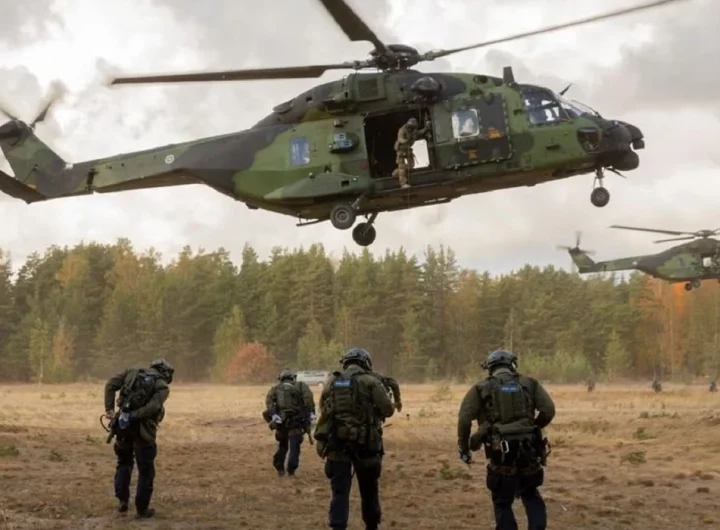 Finland moves troops near Russian border, NATO conducts military exercises
 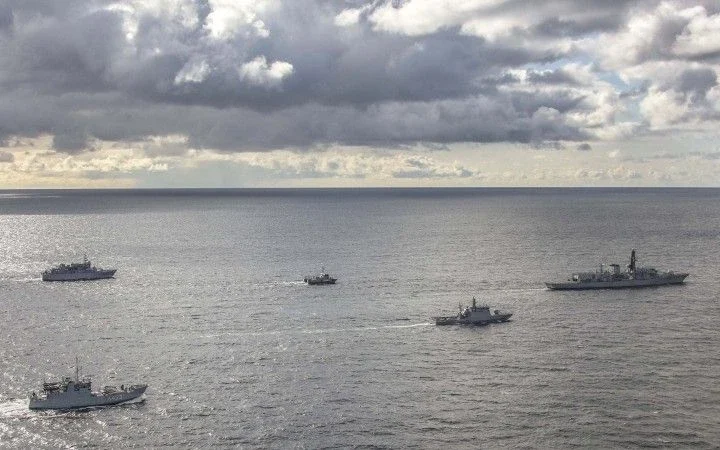 The United Kingdom is forming a new naval alliance in Europe
  Tenzer: Ukraine is winning the war, the West must help
 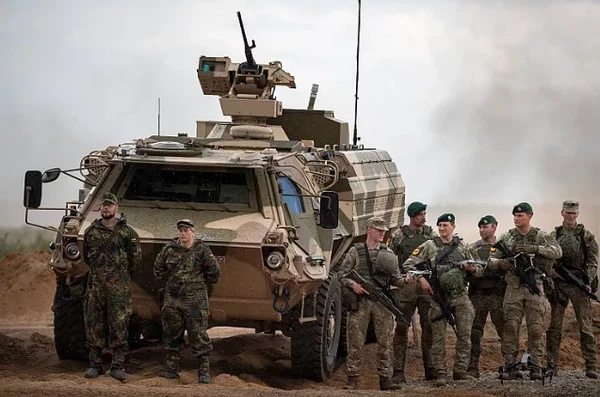 Germany is now the biggest military spender in Europe – what is it buying the most?
 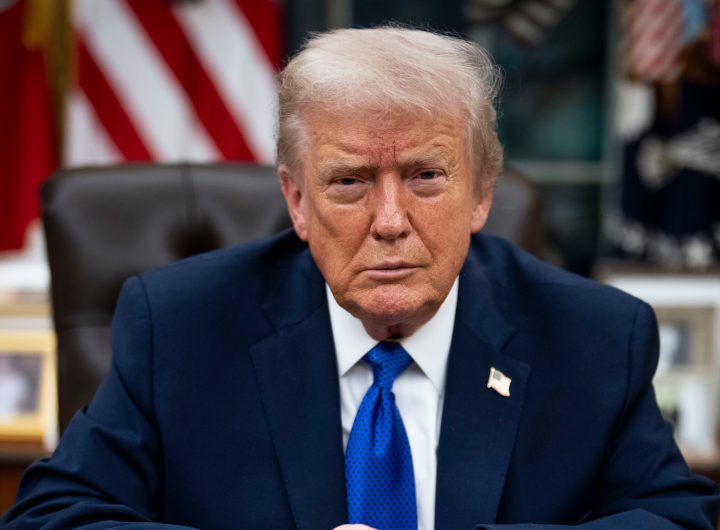 Trump: We have two options on Iran, I would rather not blow it up
 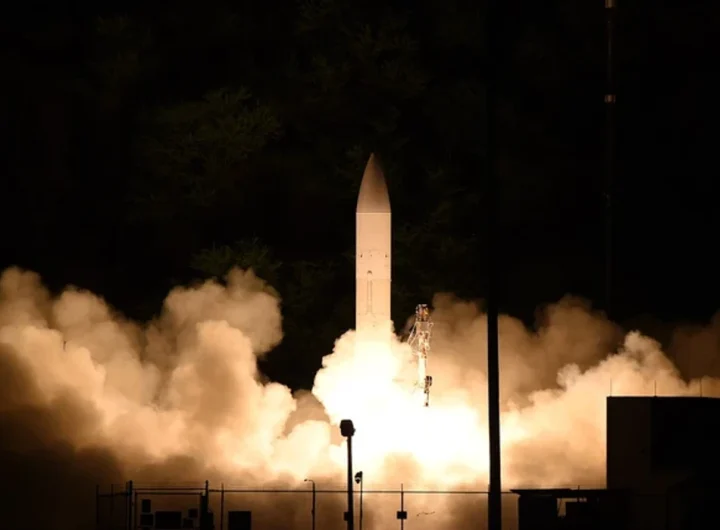 The US could use a powerful weapon against Iran for the first time – what is “Dark Eagle”?