
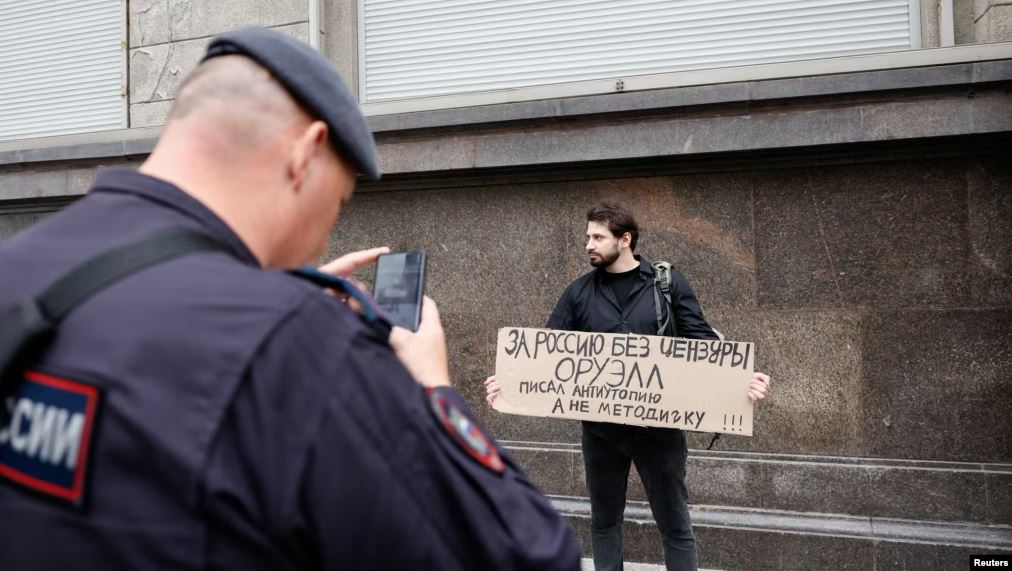
Last year, the internet was restricted 313 times in a total of 52 countries. Behind this number are blocked applications, shut down networks and millions of people disconnected from banking, work and communication services.
From Russia and Iran to Afghanistan, control over the internet has become one of the main tools that governments use to entrench power, while citizens are forced to become increasingly digitally literate just to use platforms that the rest of the “free” world takes for granted.
Internet shutdowns or blocking continue despite numerous regional and international legal frameworks, as well as their devastating impacts, while governments continue to hide behind the argument of "national security," explains Felicia Anthonio, campaign manager for "#KeepItOn" at Access Now, an organization that works to protect digital rights, to Radio Free Europe.
“In reality, these restrictions violate people’s rights, allow authorities to hide human rights abuses, and create an information vacuum that amplifies dangerous misinformation that threatens human life,” says Anthonio, who leads a campaign that brings together individuals and organizations from 106 countries working to end internet restrictions.
Restrictions as a path to control in Iran
Control over information has become one of the fundamental tools of authoritarian leaders seeking to entrench their regimes. Freedom House in its latest report points out that there are only 18 countries in the world with free access to the internet.
Of the Western Balkan countries, Serbia was included in the list, but was rated as "partly free" in terms of internet freedom, a drop from last year's rating of "free."
Even among these 18 countries, half have experienced a decline in freedoms in recent times. Internet freedoms have been in decline for 15 consecutive years, and nowhere is this more evident than in Iran, a country where residents woke up on the last day of February to a new war and no internet.
Following reports that the country's president ordered the restoration of internet access, independent monitor NetBlocks recorded a partial restoration of the internet after 88 days.
Access to apps and the “carefree” daily use of the internet that we are used to was not possible in Iran even before February 28, due to frequent outages, restrictions, and the use of VPNs to communicate freely. The internet was also shut down during the January protests, in which thousands of demonstrators were killed.
According to some estimates, internet outages contribute to direct economic losses of $30 to $40 million per day, Pooyesh Azizeddin, a technology researcher who monitors internet issues in Iran, explains to Radio Free Europe/Radio Liberty.
The recent internet ban is not an isolated technical incident, Pooyesh explains, but part of a government plan to build internal infrastructure that would be monitored and controlled.
"The result is the systematic suffocation of society. People are cut off from information, work, education, contact with family, emergency communication and public debate."
The biggest damage is political and social. For many Iranians, he explains, digital space was the last place for expression, connection, and independent living, as physical public spaces were placed under strict control.
"The restriction of this space forces people to switch to domestically monitored platforms, where privacy and anonymity are replaced by state surveillance," he stressed.
The internet outage began shortly after the US-Israeli attacks on Iran. Since then, internet traffic in Iran has virtually ceased to exist. A large number of people in the country have been unable to access apps, websites and online services.
As Pooyesh explains, those with money, technical skills, or institutional or political connections are likely to find a way to connect to the internet. There is also the option of Starlink, although it is officially banned in Iran, but the cost of the equipment is high.
In addition, the Government has announced selective internet access for certain groups such as entrepreneurs, traders and professors.
However, for most people, what remains, this expert explains, is forced migration to domestic services within the so-called Iranian internet, where users can be "identified and tracked."
The experience of using the internet in Iran and in a European country cannot be compared. And it's not just about slower internet or restrictions on certain platforms.
"In Iran, access itself is shaped by censorship, surveillance, identity control, and political risk," this researcher explains.
What exists in Iran now is not a "normal" internet, he adds. Access is uneven, dangerous, expensive and fragmented.
When there are restrictions, some people use VPNs, or virtual private networks, or other methods to bypass the blockade, but this requires technical knowledge, trusted contacts, and constant updates.
“Others try to use satellite internet or international SIM cards, but these options are expensive, difficult to secure, and carry legal and security risks.”
No internet for years in Russia
What it's like to use the internet under such conditions is something very common for residents of Russia.
Since 2018, Russians have spent a total of 37.076 hours without full access to internet services, according to measurements by the Internet Society.
This translates to four years and 99 days.
In principle, there is normal internet access in the country.
However, in reality, Russia has for years, in parallel with its invasion of Ukraine, also carried out censorship targeting independent media and platforms.
According to measurements by the Open Observatory of Network Interference (OONI), 279 media domains are blocked in Russia.
Radio Free Europe's website is also blocked in Russia, with its editorial staff now operating from Riga and Prague after REL was forced to close its Moscow office. Since 2017, REL has been labeled a "foreign agent" and since 2024 an "undesirable organization" in Russia.
At the same time, Russians are trying to introduce their own versions of YouTube, Telegram and other popular apps through the Max app, which authorities hope will become a "super-app" that will include all services in one place.
The Messenger Max app was introduced last year with public support from President Vladimir Putin, and from September all new mobile phones purchased in Russia will have Max pre-installed. Critics say it is an attempt at political surveillance and censorship.
"Russia is not yet Iran," says Mikhail Kilmarev, a digital rights activist and director of the Internet Protection Association.
“In principle, there is normal access to the internet, in the sense that people connect, pay operators and receive internet services,” says Kilmarev. He adds that some services can still be accessed without having to bypass restrictions.
However, if you want to use blocked platforms, you need to know how to bypass the restrictions. And many things are blocked, including Meta, X, Telegram, and Viber platforms. For this reason, people use VPNs, and according to Kilmarev's estimates, this system for bypassing restrictions is used by over 60 million people, or about 60 percent of all Internet users in Russia.
YouTube is also blocked in the country, while some Google services work, but very poorly. As Kilmarev explains, Gmail works, but it is prohibited from being used for registration within the country.
"So, in fact, they don't use it," explains this digital rights expert.
In such an environment, blockades and restrictions are making communication increasingly difficult, while the Russian government has long censored online content to limit opposition, monitored internet traffic on security grounds, and tightened control over the media.
How complicated it is to talk to someone in Russia today is well known to Kilmarev, who no longer lives in the country but still communicates with people there.
"Since Telegram was blocked, I can't really communicate with my mother, who is elderly and can't easily turn the VPN on and off. I understand very well what all this looks like. And of course, it looks terrible," he says.
He points out that the restrictions began while he was still living in the country and that it was very obvious how things were getting worse and worse.
Today, his organization is working on a project through which, with a network of ten thousand activists, they offer free VPNs to Russians.
"The activist helps the user connect to the internet. We have about half a million users," he says.
Afghanistan without internet
The internet was also disrupted in Afghanistan over the past year, when the Taliban first cut off fiber-optic internet and then telecommunications.
The Taliban gave no official explanation for the decision. However, the blockade came weeks after the Islamist group had already banned fiber-optic internet access in several provinces, citing concerns about "immorality."
Critics argue that this is part of a broader campaign to suppress individual freedoms and the free flow of information.
The internet outage caused a collapse in a country already facing economic problems and many other challenges, including restrictions the Taliban have placed on women. Although the internet was later restored, as of October last year, Afghans can only access Facebook and Instagram through VPNs.
"During the three-day internet blockade in Afghanistan, we faced many challenges. I am an entrepreneur and I cannot work without the internet and social platforms," said an anonymous interlocutor of Radio Free Europe/Radio Liberty's Afghan Service.
According to estimates, 16.1 percent of the population of approximately 44 million people uses the internet, while over 60 percent have a mobile internet subscription. Slightly less than half of the population owns a mobile phone, specifically 48.4 percent.
Human rights at risk
Since 2015, the internet has been disrupted 20 times in European countries.
For example, six times this happened due to protests and three times due to elections, while Russia is responsible for 65 percent of all internet outages in Europe, and Belarus for 20 percent, according to SurfShark, a VPN service that also measures internet restrictions.
Central Asian countries also face platform blockages, with most social networks blocked in Turkmenistan and Uzbekistan.
Internet outages are always an attack on human rights, says Access Now, an organization that works to protect digital rights. The lack of internet affects all aspects of life, from education and communication to banking, travel and shopping.
According to their measurements, the internet is most often disrupted during conflicts, as is currently happening in Iran. After that, the internet is most disrupted during protests, which has also been recorded in Iran, but also in many other countries. During 2025, the internet was restricted 16 times due to violence in communities.
This is exactly what happened to users of the TikTok platform in Albania, when the Government in March 2025 decided to impose a one-year ban due to videos that incited violence and bullying among peers.
The reason was the circulation of a video of the murder of a nine-year-old student, while the decision to close was justified by a survey in which 90 percent of parents agreed with the closure.
TikTok's blockade forced its users to find ways to access it, especially those whose work depends on the social network, like blogger Amela Buzi. To access the platform, she had to use a VPN, which, due to the overload, damaged her phones.
"When TikTok came back, it was like a liberation for me, because I could post without all those mechanisms and I could have the visibility I wanted," says Buzi, but adds that she's not sure if she would do the same thing again if the platform were to shut down again, because it's "exhausting and difficult."
The Government's decision lasted a year and was meanwhile opposed by media associations, which claimed that the decision violated freedom of the media and expression, while the Constitutional Court issued a decision that annulled the Government's decision.
The president of the Journalists' Association of Albania, Isa Myzyraj, told Radio Free Europe that the Constitutional Court confirmed the concerns they had and that the decision violated media freedom.
"The Constitutional Court put an end to the state's attempt to influence free speech and no government can make such a decision, namely to close social networks," says Myzyraj.
"Our assessment was that the closure of TikTok was a precedent for the closure of other social networks. It paved the way for the government to also close the internet, as Iran did, so that information could not cross borders," he emphasizes.
The Constitutional Court annulled the decision, considering it incompatible with the Constitution of the Republic of Albania and the European Convention on Human Rights, and found a violation of freedom of expression and freedom of the media as a result of the implementation of the decision to close TikTok.
According to the latest report by Reporters Without Borders, Albania ranks 83rd out of 180 countries in terms of media freedom.
The goal is not temporary censorship.
The internet is global, but our experience of using it is not universal. While, for example, European countries have considerable internet freedom and access to all platforms, countries in Central Asia face restrictions.
Most of the most popular social networks are also blocked in Turkmenistan and Uzbekistan. China has for years banned Western social networks and instead developed its own networks, along with strong censorship.
As Freedom House states, although there were hopes fueled by the Arab Spring that information technologies would help support pro-democracy movements and advance human rights, from the beginning of their media freedom measurements in 2011 it was clear that governments could use these technologies to suppress dissent, which has been seen many times.
Both democratic and authoritarian regimes use internet connectivity as a weapon in response to crises, says Felicia Anthonio of Access Now.
"Although there are those who are breaking the rules for the first time, most of these disruptions are documented in democracies that face problems due to the failure to respect fundamental democratic rights and human rights," she emphasizes.
Governments shut down the internet, she adds, to silence dissent, restrict basic rights and control the narrative at key moments, “virtually destroying the internet precisely when it is needed most.”
"This growing digital repression not only defeats the purpose of an open and safe internet for all, but aggressively undermines fundamental freedoms and creates a dangerous accountability vacuum," she adds.
This is also what is happening in Iran, a country where internet outages and platform blocks are not unknown. However, as Pooyesh says, the goal is not temporary censorship.
"But rather, the restructuring of Iran's digital environment into a system where access, identity, information, and communication are controlled by the state."
In short, he concludes, internet restrictions are not "emergency measures."
"They are part of a broader project to replace the open internet with a digital order that would be monitored, unequal, and politically compliant," she explains.
Today, our lives depend in many ways on access to the internet. We pay our bills, our transportation tickets are there, we use it for communication, planning, entertainment, and learning.
Each new generation that grows up is more digitally prepared than the previous one, and while governments on the one hand look for ways to block access to the internet, users on the other are finding new ways to connect.
And while people in many countries are finding cutting-edge methods to combat internet restrictions, global internet freedom continues to deteriorate, raising concerns among numerous organizations, including UNESCO, which condemns “all actions that deny citizens the right to access information, including through online means.”
Globally, according to Freedom House data, 5.5 billion people have access to the internet, of whom 81 percent live in countries where individuals have been arrested or imprisoned for publishing content on political, social, or religious topics.
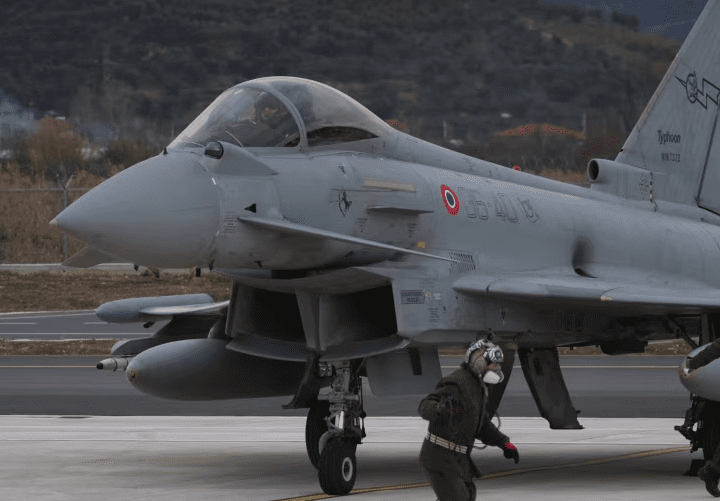 Albania: Porto Romano and Corridor VIII, key projects for NATO mobility
 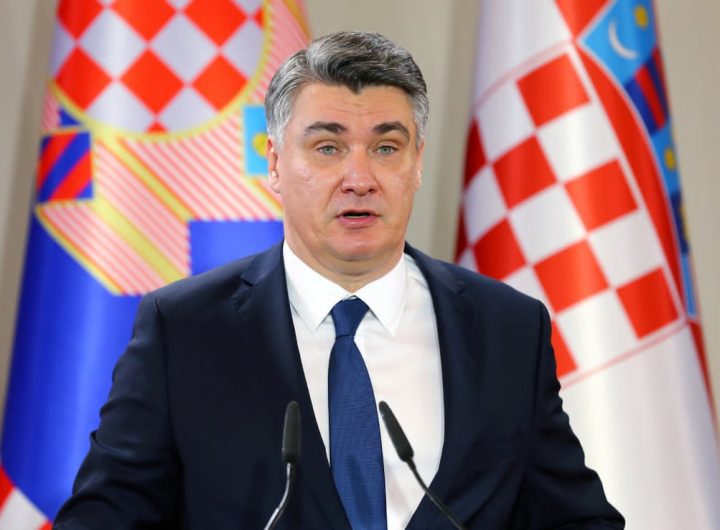 Milanovic: Vucic is scaring citizens with comical stories about attacks by Croats and Albanians
 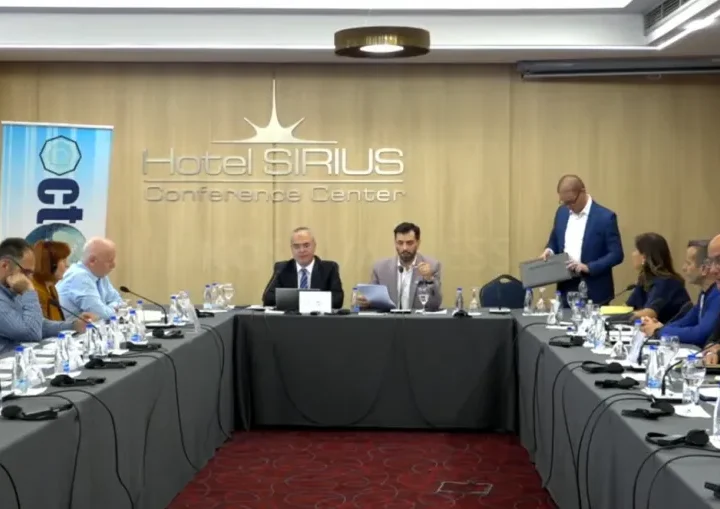 Octopus Forum: Serbia is using hybrid warfare to influence elections in Kosovo
  In the middle of Belgrade, nationalist propaganda and graffiti about Kosovo
  Vučić in threatening tones after the closure of the illegal institution in Zvečan: We will wait for the "favorable moment" to act
  Pro-Russian network in Serbia, BBC: Organizations linked to the Kremlin and the Serbian government are spreading propaganda and influence