

US Congressman Joe Wilson, the proponent of the initiative to move the annual meeting of the OSCE Parliamentary Assembly from Serbia to South Carolina, explains that his main reason for such a proposal is the "excessive influence" of Russian President Vladimir Putin in Serbia.
"Unfortunately, the war criminal Putin bought the national oil company NIS. In addition, there is excessive influence of the Chinese Communist Party when it comes to communications and other investments. And what is even more unacceptable to me is the connection to the dictatorship in Tehran," Wilson said in an interview with Radio Free Europe.
When asked about Serbia's negotiations to sell NIS, which is majority-owned by Russia, Wilson replied: "the negotiations are not enough."
While comments are coming from experts supporting the proposal of American representatives to hold the next annual meeting of the Parliamentary Assembly of the Organization for Security and Cooperation in Europe (OSCE PA) in America, and not in Serbia, the organization confirmed to Radio Free Europe that it is aware of the resolution.
"As an international parliamentary institution, the Assembly continues to function in accordance with its established rules and procedures, including those decisions regulating the venue of its meetings," the OSCE International Secretariat told Radio Free Europe.
Why is Serbia problematic?
Serbia's ties with Russia, as well as Minister Snezhana Paunovic's recent statements regarding Kosovo, are at the center of US lawmakers' efforts to move the OSCE Parliamentary Assembly session from Serbia to the United States.
Led by Congressman Joe Wilson, a Republican representative and head of the US delegation to the OSCE Assembly, a bipartisan group of representatives submitted a resolution to Congress calling for the next OSCE Parliamentary Assembly to be held in Charleston, South Carolina, instead of Belgrade.
“Recent statements by senior Serbian government officials, coupled with Serbia’s continued alliance with war criminal Putin, raise serious questions about whether Serbia is a suitable host for one of Europe’s leading institutions dedicated to democracy, human rights and the rule of law,” said the letter signed by Wilson, originally from South Carolina, and addressed to the President of the OSCE Parliamentary Assembly, Pere Joan Pons Sampietro, and Secretary General Roberto Montella.
"Unfortunately, the threats coming from Serbia should not exist in the 21st century. They should not happen," Wilson told Radio Free Europe. "The way to achieve this is to cut off the relationship and influence of the war criminal Putin in Serbia, cut off the influence of the Chinese Communist Party, which is very insidious, and cut off any connection with the dictatorship in Tehran, which has a clear goal of bringing death to America," the US representative said.
If it wants to maintain its credibility, the OSCE must be consistent with its own principles, believes Ivana Stradner from the Foundation for Defense of Democracies in Washington.
"A country that refuses to align its foreign policy with its European partners, while simultaneously deepening relations with Russia, China and Iran, can hardly be a credible host of a meeting dedicated to European security," Stradner said in a commentary for Radio Free Europe.
“The deeper Belgrade's ties with Moscow, Beijing and Tehran, the harder it is to explain why Belgrade would welcome an organization based on democracy, the rule of law and human rights,” he adds.
Edward P. Joseph, a lecturer at Johns Hopkins University SAIS, agrees, saying it would be a “terrible mistake” to hold the Parliamentary Assembly in Belgrade.
“Holding the OSCE Parliamentary Assembly in Belgrade at a time when officially, even from the EU perspective, the government is acting in a very undemocratic manner would be sending absolutely the wrong signal,” Joseph said.
Joseph, an American lecturer with extensive experience in the Western Balkans, says he supports the lawmakers’ efforts 100 percent. He adds that the move is a sign of deep concern among bipartisan members of Congress, including some prominent Republicans, about “the direction Serbia is taking.”
The resolution was supported by 41 MPs, and Joseph also emphasizes the importance of uniting members of both parties around this resolution.
“A bipartisan action of any kind in the American Congress these days is very unusual, so this is a clear indication of the serious concern in Congress about this action,” Joseph added. “And I hope that the OSCE will take this into account and move the Parliamentary Assembly either to the United States or to some other country.”
The annual session is planned for next year in Belgrade, following, as explained by the OSCE International Secretariat, a decision taken by their Standing Committee during its last meeting in The Hague.
“At the same meeting of the Standing Committee, the United States delegation informed the Assembly that it would not be able to proceed with the organization of the 2027 Annual Session in Charleston, South Carolina,” the SP Secretariat explains. “Following this development and the offer from the Serbian delegation, the Standing Committee decided that the meeting would be held in Belgrade.”
Belgrade previously hosted
The Parliamentary Assembly consists of 323 members from 57 countries, including Serbia and the United States. Members are appointed by their national parliaments and meet at least three times a year. The Assembly's main task is to facilitate inter-parliamentary dialogue to advance the OSCE's objectives in terms of comprehensive security.
Originally established at the Paris Summit in 1990, the Parliamentary Assembly works to promote greater participation of national parliaments of OSCE participating States, and today also works to support the strengthening and consolidation of democratic institutions in participating States.
This year's annual session was held in The Hague, the Netherlands, with a focus on international law and common principles. Belgrade, which has been announced as the host city of the Parliamentary Assembly next year, already hosted the same event in June 2011.
But Joseph points out that the climate is different today.
“The 2012 elections dramatically changed the course of the election,” says Joseph. The elections brought the Serbian Progressive Party, along with the country’s current president, Aleksandar Vučić, to power, defeating the political forces that had toppled autocrat Slobodan Milošević in 2000.
Although it is a candidate for membership in the European Union, Serbia has not opened any new negotiation chapters for almost five years, due, among other things, to insufficient progress in the area of the rule of law, but also to the failure to harmonize its foreign policy with the EU.
Two months after the opening of the last chapter, the war in Ukraine began, Serbia failed to align its foreign policy with that of the European Union and imposed sanctions on Russia. This was the main reason for the stalling of accession negotiations at the time, and in the meantime, the rule of law deteriorated.
In its latest Rule of Law Report for 2026, the European Commission highlights persistent, and in some areas even worsening, problems with the independence of the judiciary, the autonomy of the prosecutorial office, the fight against corruption, media freedom and democratic governance in the country.
In his letter to the OSCE, Congressman Wilson also notes that Serbia remains one of the few European countries that refuses to impose sanctions on Russia “while continuing to deepen political, economic, and energy ties with Moscow.” The congressmen also highlight the fact that Serbia continues to maintain a visa-free regime with Russia.
Thanks to the visa-free regime, thousands of Russian citizens passed through Serbia after Moscow launched its invasion of Ukraine in 2022 and imposed sanctions against Russia.
According to data from the Serbian Ministry of Internal Affairs last year, more than 48,000 Russian citizens have temporary residence in Serbia. Moreover, despite EU warnings about potential security risks, more than 300 Russians have obtained Serbian citizenship since the beginning of Moscow's deadly invasion of Ukraine.
"Serbia's broader policy has consistently preserved war criminal Putin and his political, economic and diplomatic influence in the Balkans, which is in contrast to the coordinated response adopted by most OSCE member states following Russia's murderous invasion of Ukraine," the letter states.
Joseph also emphasizes that compliance with EU sanctions is Serbia's obligation as a candidate country.
Serbia must decide which side it is on, Joseph echoes the words of German Chancellor Friedrich Merz from the EU-Western Balkans summit.
At a summit held in early June in Tivat, Montenegro, Merz said that Serbia's balancing act between China, Russia and Europe was unacceptable.
"Serbia must decide clearly where it sees its future. And if Serbia's answer is Europe, then Europe's answer is Serbia," Merz said at the time.
However, Joseph emphasizes that the real reason why Serbia continues its relations with Russia and refuses to impose sanctions is because “the US and the EU allowed this.”
"And only now do we see this important sentence from Chancellor Merz in Tivat. We will see whether Germany and the EU will react. And this is a very important signal from members of Congress and we need to see whether the US administration will recognize this signal."
Serbia's balancing policy is also emphasized by Ivana Stradner, who says that Vučić's government today looks more like "a stage for geopolitical balancing than a symbol of European values."
“Vučić’s policy is not neutrality, but rather a constant negotiation about who will offer the most: European money, Chinese investment, Russian support and American legitimacy,” says Stradner.
Serbian President Aleksandar Vučić recently announced a new purchase of Chinese supersonic ballistic missiles, despite warnings from the West. According to internationally available arms registers, Serbia is the only country in Europe to possess these missiles, and Beijing is Belgrade's largest military supplier, while both the EU and the US have repeatedly warned Serbia about the dangers of deepening military cooperation with China.
Relations with Iran
In addition to relations with Russia, US Congressman Wilson also stated in his post on X that Serbia has excessive "Russian, Chinese and Iranian" influence and that their official attended the funeral of Ali Khamenei, the Iranian supreme leader killed in a joint US-Israeli operation on February 28.
Serbian Minister of Information and Telecommunications Boris Bratina was among the few European representatives at the funeral of Iran's Supreme Leader Ayatollah Ali Khamenei. Belgrade has maintained friendly relations with Iran in recent years, despite the country being under international sanctions over its nuclear activities and human rights abuses.
Wilson cites in the letter a statement made earlier this month by Minister of State Administration and Local Self-Government Snežana Paunović, in which she said: “If I were Slobodan Milošević, I would have carried out ethnic cleansing in Kosovo in 1998.”
An investigation by Radio Free Europe/Radio Liberty revealed that, for years, while she was a member of parliament in Serbia, Minister Paunović received a salary as director of the Institute of Pharmacy in Kosovo, even after the institution ceased to exist. The minister denies this information.
“Statements that appear to support ethnic cleansing are fundamentally incompatible with the principles on which the OSCE was founded,” Wilson’s letter said.
During the war in Kosovo, more than 13,000 civilians, mostly Albanians, were killed, while thousands more disappeared.
The leaders of the then Yugoslavia and its security forces were identified before the Hague Tribunal as key participants in a joint criminal enterprise to forcibly expel hundreds of thousands of Albanian civilians from Kosovo from March to June 1999.
What will happen to the annual meeting?
Wilson says he will continue to support the US being a suitable host for the OSCE Parliamentary Assembly in 2027. If he fails, his position is clear.
"I hope that, regardless of which country is the host, it will be a country that will reduce the influence of the war criminal Putin, the influence of the Chinese Communist Party, and the influence of the mullahs in Tehran who want America dead," Wilson concluded in an interview with Radio Free Europe.
The Serbian National Assembly did not respond to Radio Free Europe's question about the resolution calling for the Parliamentary Assembly to be relocated from Serbia. The Office of the President of Serbia also did not respond.
 Vučić's regime targets lawyer for victims of police violence: "They are taking revenge on me"
 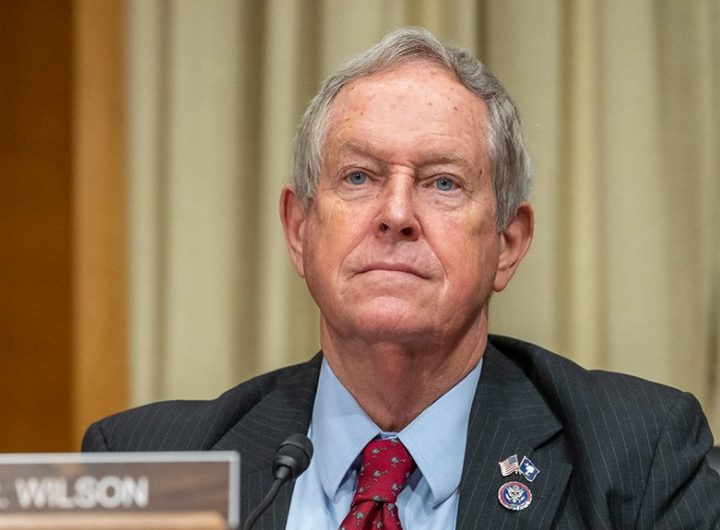 Congressman Wilson: Serbia should stop threats against Kosovo and disengage from Moscow
  Who are the two Serbs arrested on suspicion of war crimes in Kosovo?
 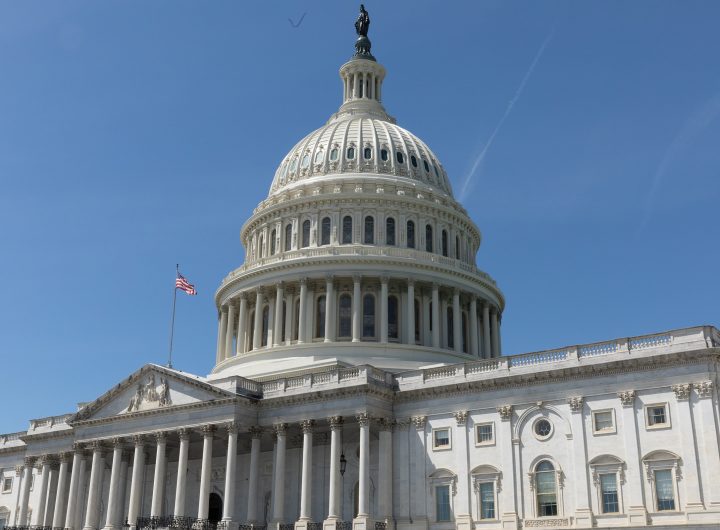 US Congress passes resolution against holding OSCE Assembly in Belgrade, mentions Serbia's position on Kosovo
 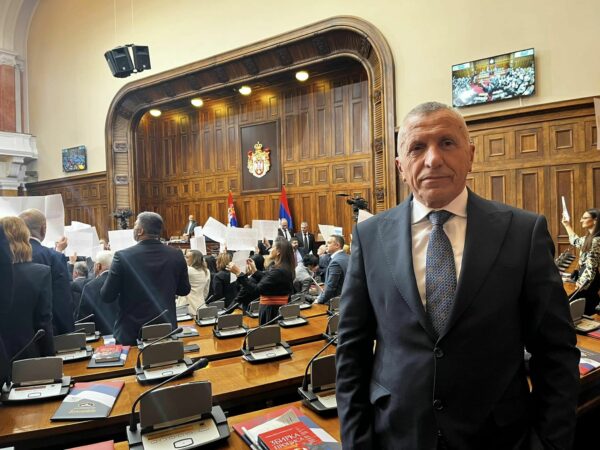 Kamberi: Vučić's regime must leave, Serbia must confront the crimes in Kosovo
  From November, Russians, Chinese and Turks will need visas to enter Montenegro