
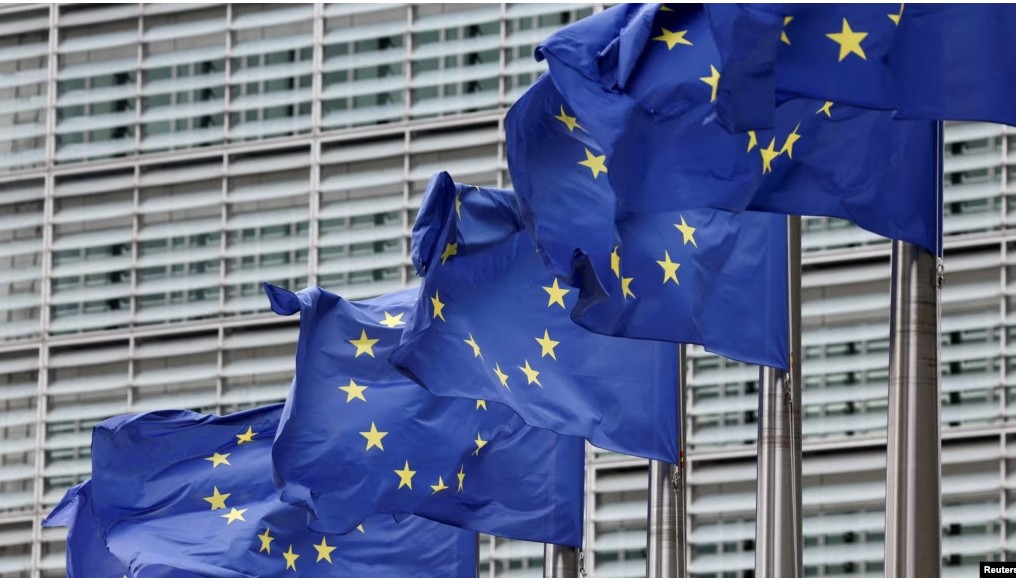
The foreign ministers of the European Union (EU) member states on Monday gave political support for deepening cooperation with the Western Balkan countries on external security and defense issues.
In the morning session of the ministerial meeting, The heads of diplomacy of the EU member states met with six colleagues from the countries of the region.
The EU High Representative for Foreign Affairs and Security Policy, Kaja Kallas, explained at the end of the meeting that Brussels is ready to support the countries of the region in their efforts to combat hybrid threats and disinformation, as well as through greater use of the European Peace Facility to strengthen the defense capacities of partners.
However, European ministers have urged countries in the region to align with common values.
"Member states have expressed the expectation that all countries will embark on the European path and will be fully aligned with the common foreign and security policy, because in these geopolitical times in which we live, it is not just about fulfilling obligations for the sake of order, but actually showing whether we see the world in the same way," said Kallas.
She noted that not all countries in the region are fully compliant with the European Union's sanctions policy.
"We know very well that all the countries of the Western Balkans are different and have a different view on things, which is mainly reflected in compliance with the common foreign and security policy," Kallas added.
She emphasized that the partnership is two-way, therefore further reforms, respect for the rule of law, as well as clear alignment with EU foreign policy are expected from the countries of the region.
Some Western Balkan countries have not fully aligned with European Union sanctions against Russia, especially after the invasion of Ukraine.
The country most frequently cited for not imposing sanctions is:
Serbia has not imposed sanctions on Russia and continues to maintain close political and energy relations with Moscow.
Meanwhile, Kosovo has aligned itself with EU and US sanctions against Russia.
Albania, North Macedonia and Montenegro have almost fully aligned with EU foreign policy.
Bosnia and Herzegovina has had more complicated positions due to opposition from Republika Srpska and internal political structure, but in some cases has moved closer to EU positions.
The GeoPost
 Authorities say excavations at Zubin Potok could take longer, call for investigation not to be harmed
  Serbia's request for a consulate in Shkodra is met with opposition in Albania
  "Panda" case: Serbian prosecutor says BIA has not responded to request to question Vučić
  Belgrade continues its propaganda rhetoric: It presents the Law on Tourism as "erasing Serbian identity" in Kosovo
  Institute report: Over 80 percent of Albanians killed in Kosovo were civilians
  Brussels responds to Vučić's rhetoric towards Kosovo