

Dr Boris Varga, columnist from Serbia for the Geopost
In March, Serbian Deputy Prime Minister Aleksandar Vulin visited Russia and thanked its authorities for “supporting the legal and legitimate authorities of Serbia and restoring order and stability in the country.” Apart from the intelligence information that Vulin boasts about, it is not known how Russia has helped the Serbian regime to establish order and maintain regime stability when students and citizens have been peacefully protesting for six months without demanding a change of government.
On the other hand, almost every day, representatives of the Serbian government talk about the fact that a 'color revolution' is being attempted in Serbia. President Vučić has said that more than three billion dollars have been invested in the 'color revolution' by the West and has singled out the United Kingdom as one of the countries participating in it.
The claim that there is external support and financing for the mass demonstrations from the West has never been proven by the Serbian authorities. However, it is well known that Serbia is actively committed to combating “color revolutions” not only at the domestic political level, but also at the international level, and in this it joins the main authoritarian regimes.
Russia and China see mass protests and “color revolutions” as a major threat to their unchanging regimes, and the issue is at the top of the agenda of the Moscow-Beijing-led Shanghai Cooperation Organization summit.
Serbia officially joined this war a few months before the full-scale Russian aggression against Ukraine in December 2021. Although it will be formed in the strictest secrecy, Vulin confirmed that Russia and Serbia have formed a Working Group to combat “color revolutions”, whose task is to prevent mass demonstrations and exercise constant surveillance of opposition activists and independent journalists, NGOs.
Students in Serbia strongly deny that there has been any revolution to overthrow the government, let alone a “color revolution.” A pejorative interpretation of this term has entered Serbian media from Russian propaganda, but it is almost universally accepted that these are state overthrows of power with the help of Western secret services.
There is no uniform interpretation of the “color revolution” in Serbian public media discourse, except that these are revolutions in the post-Soviet space in Georgia, the “Rose Revolution” (2003), in Ukraine, the “Orange Revolution” (2004) and in Kyrgyzstan, the “Tulip Revolution” (2005). These revolutions are hardly related to the overthrow of Slobodan Milošević on October 5, 2000, which was the basis for all “electoral” or “colored” or “color” revolutions.
Aleksandar Vučić’s obsession with the “color revolution” is not a new phenomenon. Mass protests against the Serbian authorities have been taking place for almost a decade, almost since the Serbian Progressive Party came to power, and in recent months the revolt against corruption has reached its peak. On March 15, the largest rally in Serbia’s multi-party system took place in Belgrade, attended by more than 300,000 people.
This rally was interrupted in a moment of silence by an unidentified sound device, supposedly a weapon to break up mass demonstrations, believed to be a sound cannon. Authorities contradictorily deny all these allegations.
Vučić also said that by Vidovdan (June 28) he would write a book “How I defeated the color revolution.” Analysts and journalists working on weapons issues argue that the authorities’ use of an as-yet-unidentified agent could be a huge, expensive experiment and the shock of testing an inhumane act on a crowd of thousands of people standing in silence and peace.
It is not known whether the use of modern weapons in Belgrade to combat the demonstrations is part of the restoration of order and stability in the country, for which Vulin thanked Moscow. Vučić is clearly pleased and is already celebrating his victory, the only question is whether his method from the “book” will enrich the work of the Serbian-Russian working group on the fight against “color revolutions” or whether this tool against the demonstrators is just a copy of a previously prepared Russian-Chinese recipe.
/The Geopost
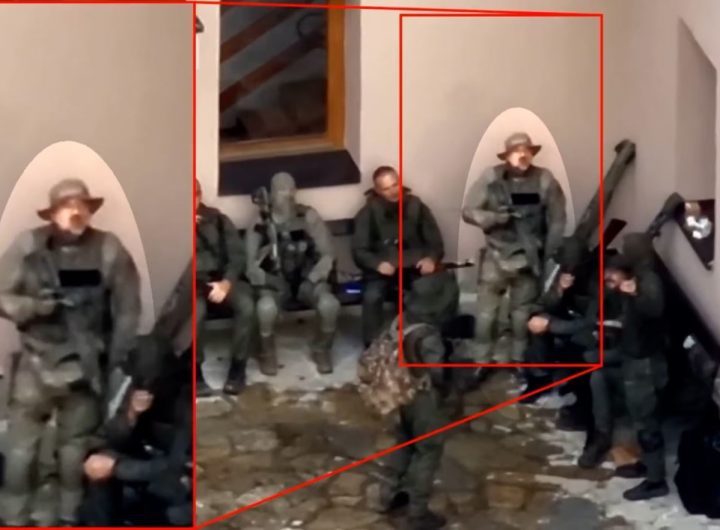 Serbia launches investigations against former government officials, but will the files of Banjska and Radoicic also be opened?
 Radar publishes exclusive documents on secret surveillance of Vucic's critics by the BIA
 Vučić pardoned 49 people before leaving the presidency, the list includes former officials and people involved in incidents
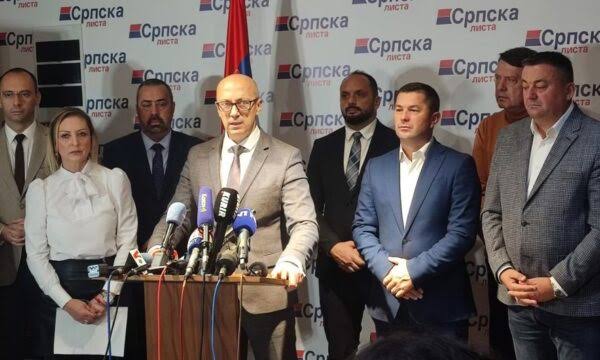 Vučić's defeat in Serbia, is Belgrade's influence over the Serbian List in Kosovo coming to an end?
 A Serbia without Vučić, but with the same policy towards Kosovo?
 Serbian experts: Students take power, but not a Serbia detached from Russia and China